Children are always on the move, even before they learn to read or write. They crawl across the floor, climb onto furniture, and run without thinking twice. This movement is how they explore, learn, and grow. In Singapore, however, limited space and busy schedules can sometimes reduce opportunities for active play. When movement is pushed aside, children may miss out on important physical experiences that support healthy development.
Simple, everyday gross motor activities can make a meaningful difference. With a little intention, playtime at home, in school, or outdoors can support physical development in ways that feel natural and enjoyable. This guide shares practical gross motor skills activities that fit easily into daily routines and work well for families in Singapore.
What Are Gross Motor Skills and Why They Matter
Gross motor skills involve the large movements children use every day. These skills are at work when a child sits up independently, crawls across the floor, jumps over a puddle, or climbs playground steps. They rely on the body’s larger muscle groups and form the foundation for everyday movement.
When children have regular opportunities to move, their bodies learn how to work together efficiently. They develop better balance, coordination, and body control. Active movement also supports focus during learning, helps children manage daily routines more easily, and encourages confident participation in play with others. Over time, these experiences help children approach new physical challenges with greater ease and confidence.
5 Essential Indoor Gross Motor Skills Activities

Indoor gross motor activities are especially useful for families living in HDB flats or condominiums, where space is limited. These fun and simple exercises help young children move, build strength, and develop coordination. making them ideal gross motor skills activities for toddlers.
1. Tummy Time — Getting Strong from the Start
Tummy time is one of the earliest and most important gross motor skills activities for infants. Lying on their tummy encourages babies to lift their heads, push through their arms, and engage their core muscles. These movements build neck, shoulder, and back strength, supporting later milestones like rolling and crawling.
Best for: 0–6 months
Materials: Soft mat or blanket, small toys
How to do it: Place your baby on a soft surface several times a day for short periods. Position toys or your face within reach to encourage lifting and turning.
Tips: Keep the experience playful with smiles, talking, or singing. Always supervise closely.
2. Crawling Games — Explore and Move
Crawling strengthens coordination, balance, and spatial awareness. As babies move forward using both arms and legs, they develop the muscles and movement patterns needed for standing and walking. Turning crawling into a simple game encourages longer and more enthusiastic practice.
Best for: 6–12 months
Materials: Cushions, soft toys, open floor space
How to do it: Create a short crawling path using cushions or soft objects. Encourage your child to crawl toward a toy or familiar face.
Tips: Celebrate effort with claps or gentle encouragement to keep motivation high.
3. Rolling, Throwing, and Kicking a Ball
Ball play is a versatile indoor activity that supports coordination and body awareness. Rolling, throwing, or gently kicking a ball helps children learn to track movement, time their actions, and coordinate arms and legs together.
Best for: 12 months+
Materials: Softball or foam ball
How to do it: Roll the ball toward your child and encourage them to roll, throw, or kick it back. Increase distance gradually as confidence improves.
Tips: Use soft balls indoors to protect furniture and reduce the risk of injury.
4. Dance and Music Movement
Dancing allows children to move freely while responding to rhythm and sound. Twisting, jumping, stretching, and spinning all support coordination, flexibility, and muscle strength while giving children a healthy outlet for energy.
Best for: 2 years+
Materials: Music and open space
How to do it: Play music and invite children to move in their own way. Add simple actions or animal movements for variety.
Tips: Join in the dancing, children enjoy copying adults, and it strengthens connections through shared play.
5. Balance Activities — Steady and Strong
Balance activities help children develop stability and control. Simple challenges like walking along a line or stepping between cushions strengthen core muscles and improve focus and coordination.
Best for: 2–5 years
Materials: Tape lines, cushions, low stable surfaces
How to do it: Create simple paths for walking, hopping, or standing on one foot.
Tips: Turn it into imaginative play, such as walking a tightrope or hopping across stepping stones.
5 Essential Outdoor Gross Motor Skills Activities

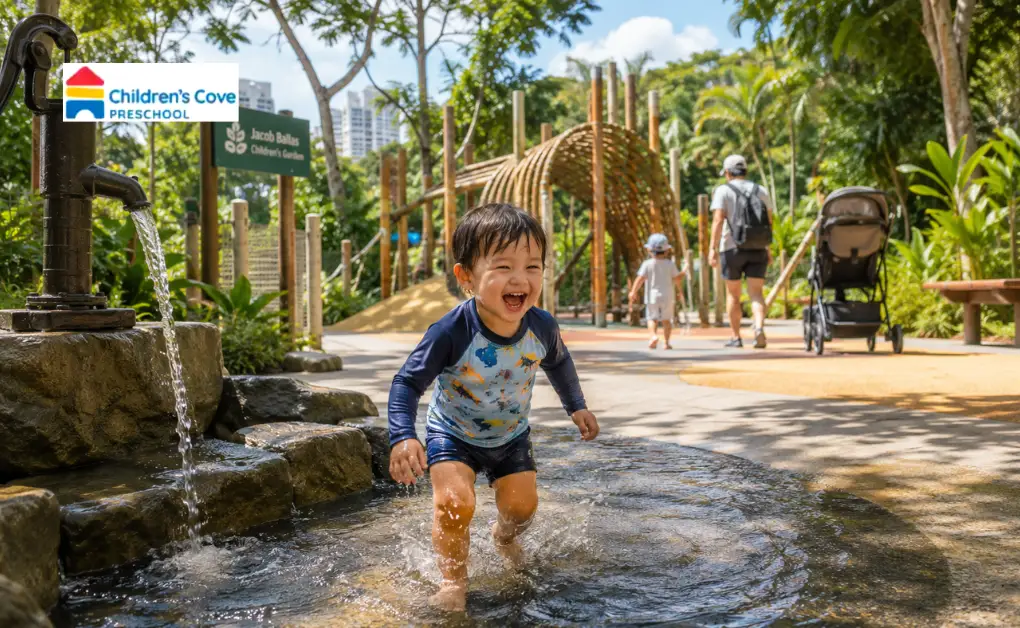
Outdoor play gives children more freedom to move, explore, and challenge their bodies in different ways. Parks, playgrounds, and preschools in Singapore provide safe spaces for children to run, climb, and ride, supporting their gross motor development and confidence.
6. Jumping and Hopping Play — Energy with Purpose
Jumping helps build leg strength, balance, and body awareness. Whether jumping on the spot or hopping forward, these movements support coordination and control.
Best for: 18 months+
Materials: Open space, soft ground or mat
How to do it: Encourage children to jump with both feet and land gently. Add counting or animal-themed jumps to keep it engaging.
Tips: Keep sessions short and always supervise closely.
7. Obstacle Courses — Movement and Problem-Solving
Obstacle courses are perfect gross motor skills activities for 3 year olds and preschoolers. Obstacle courses turn outdoor spaces into active adventure zones. Crawling under benches, stepping over low objects, and weaving around markers help children plan movements and adjust their balance as they move.
Best for: 2–6 years
Materials: Cones, cushions, benches, safe household items
How to do it: Set up a simple route and demonstrate it first. Allow children to explore and adapt their movements.
Tips: Change the layout regularly to maintain interest and encourage problem-solving.
8. Throwing and Catching Games
Outdoor throwing and catching games give children more room to move freely. These activities improve hand-eye coordination, timing, and reaction while also encouraging social skills like turn-taking.
Best for: 2–6 years
Materials: Soft balls, beanbags
How to do it: Toss a ball gently and encourage your child to throw or catch. Increase difficulty by adding movement or distance.
Tips: Focus on effort and enjoyment rather than accuracy.
9. Climbing Play — Reaching New Heights
Climbing engages the whole body and helps children develop strength, confidence, and spatial awareness. Each successful climb teaches children how to judge distance and plan their movements safely.
Best for: 2–6 years
Materials: Playground structures, ladders, stairs
How to do it: Demonstrate safe climbing and allow children to move at their own pace.
Tips: Supervise closely and encourage children to use hands and feet carefully.
10. Scooter and Ride-On Play — Wheels in Motion
Scooters and ride-on toys support leg strength, balance, and coordination. They also encourage independence and exploration, making them ideal for children gaining confidence in outdoor movement.
Best for: 3–6 years
Materials: Scooter, balance bike, ride-on toy, helmet
How to do it: Encourage children to push, steer, and stop safely. Add simple paths or gentle races for fun.
Tips: Helmets and safety gear are essential. Confidence and enjoyment matter more than speed.
Extra Gross Motor Games for Variety
These activities add movement without requiring large spaces:
- Animal Walks: Move like a bear, a frog, or a crab to activate different muscle groups.
- Balloon Volleyball: Encourages jumping, reaching, and stretching with minimal risk.
- Simon Says (Movement Version): Combines listening skills with active movement.
Quick Tips to Support Your Child’s Movement
- Mix indoor and outdoor play regularly
- Keep activities fun and pressure-free
- Use mats and soft surfaces where possible
- Celebrate effort rather than perfection
- Aim for short, consistent daily movement sessions
Conclusion
Every moment children spend moving, crawling, climbing, dancing, or riding, supports more than just physical strength. These activities build coordination, confidence, and curiosity while helping children understand their bodies and surroundings.
In Singapore’s compact and fast-paced environment, simple and intentional movement opportunities can have a lasting impact. Making active play part of daily life helps children grow strong, confident, and ready to take on new challenges.
FAQs
1. What are the five types of gross motor skills?
They include balance, coordination, strength, body awareness, and movement control. Together, these skills support running, jumping, climbing, and everyday play.
2. How do I know if my child has a gross motor delay?
Signs may include difficulty sitting, crawling, walking, or balancing compared to peers. If concerns persist, consult a healthcare professional.
3. How do you improve gross motor skills?
Through regular movement-based play such as jumping, climbing, dancing, and outdoor activities. Consistency in a supportive environment makes the biggest difference.
4. At what age should children start developing gross motor skills?
From birth. Early movements like kicking and rolling gradually develop into crawling, walking, and running throughout early childhood.
5. Can limited space affect my child’s gross motor development?
No. With creative indoor activities and regular outdoor play, children can develop strong gross motor skills even in smaller homes.