Parenting can feel overwhelming, especially in the early years. Between busy schedules, limited space at home, and constant advice online, many parents wonder which activities truly support development. You may find yourself asking how to keep your child engaged, reduce screen time, and encourage learning without adding stress to daily life.
Sensory play offers a simple and effective solution. This guide explains sensory play for kids, including sensory play for babies, toddlers, and preschoolers. It shows how to include sensory activities naturally at home or in preschool settings across Singapore. With practical ideas and realistic expectations, sensory play can become an easy, enjoyable part of everyday routines.
What Is Sensory Play?
Sensory play refers to activities that engage a child’s senses and help them explore their environment through hands-on experiences. Children learn through touch, sight, hearing, movement, smell, and taste. These sensory experiences help them understand how the world works and how their bodies respond to it.

Rather than focusing on instructions or outcomes, sensory play allows children to learn through exploration. This approach is especially important in the early years, when the brain is developing rapidly. Whether through simple sensory activities for babies or more complex ones for older children, sensory play supports curiosity, independence, and problem-solving skills.
How Sensory Play Supports Children’s Development
The importance of sensory play lies in its support for multiple areas of development at the same time. Sensory experiences allow children to learn naturally, without pressure or formal teaching.
Regular sensory play can support:
- Cognitive development, including attention, memory, and problem-solving
- Physical development, such as coordination, balance, and muscle control
- Language development, as children describe sensations, actions, and materials
- Emotional regulation, by providing calming or organising sensory input
- Social development, through shared sensory experiences and cooperative play
These combined benefits explain why sensory play is important in the early years and why it is widely used in early childhood education settings.
When and How to Start Sensory Play
Sensory play can begin from birth and continue throughout childhood. Sensory play for babies may look very different from sensory play for preschoolers, but both are equally valuable when activities are age-appropriate and child-led.
There is no fixed schedule for sensory play. Short, regular experiences are often more effective than long, structured sessions. Many parents in Singapore find that sensory play works best when it is woven into daily routines, such as bath time, outdoor walks, or simple indoor play.
Sensory Play by Age Group
Sensory Play for Babies (0–12 months)
Babies explore primarily through their senses. Sensory play for babies focuses on gentle, safe experiences that support early brain development and bonding.

Common sensory activities for babies include:
- Feeling soft fabrics, textured toys, or safe household items
- Listening to familiar voices, music, or gentle sounds
- Watching light, movement, and high-contrast patterns
At this stage, supervision is essential, and activities should remain calm and comforting.
Sensory Activities for Toddlers (1–3 years)
Toddlers are naturally curious and eager to move, touch, and experiment. Sensory activities for toddlers often involve repetition, mess, and physical movement.
Popular sensory play ideas for toddlers and infants include:
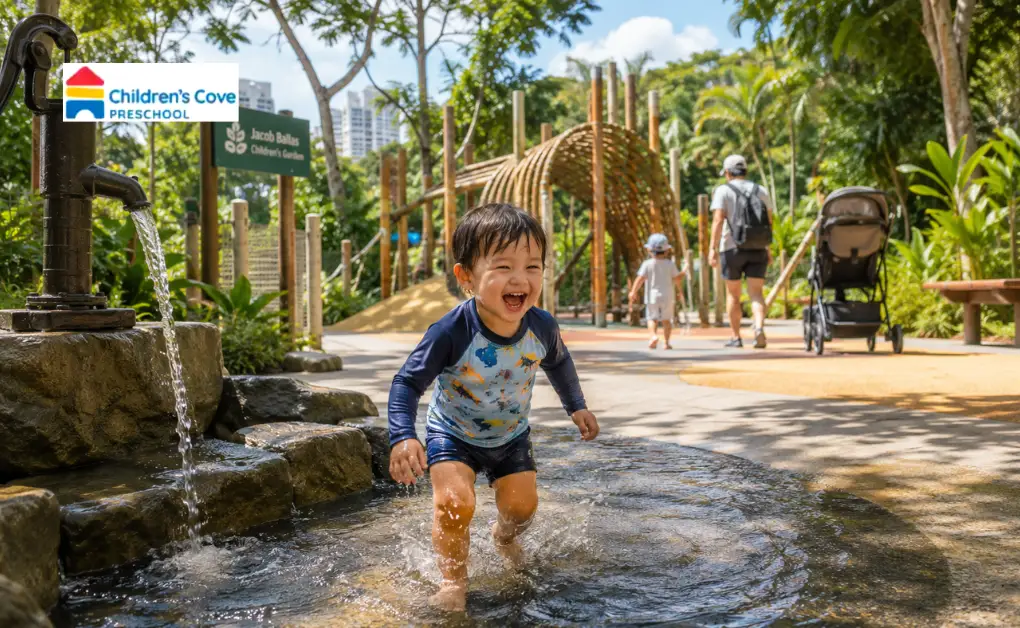
- Water play with cups, bowls, and containers
- Scooping and pouring rice, pasta, or sand
- Pushing, pulling, climbing, and carrying objects
Mess is part of learning at this stage, and these activities support coordination, body awareness, and early problem-solving.
Sensory Play for Preschoolers (3–6 years)
Sensory play for preschoolers becomes more complex, often combining sensory input with imagination, creativity, and social interaction.

Examples of sensory play ideas for preschoolers include:
- Sorting, building, and constructing
- Movement-based games and obstacle courses
- Sensory art, science play, and simple experiments
Preschool-aged children are also better able to describe what they feel and notice, strengthening language and communication skills.
The 7 Key Types of Sensory Play
Children process information through multiple sensory systems. Effective sensory play activities support these systems and help them work together to build strong foundations for learning and daily functioning.

1. Tactile (Touch)
Exploring textures, temperature, and pressure through the skin. This helps children develop awareness of different sensations and improves fine motor control and hand strength.
2. Visual (Sight)
Recognising colours, shapes, light, movement, and contrast. Visual sensory play supports focus, tracking skills, and early problem-solving abilities.
3. Auditory (Hearing)
Listening to and distinguishing sounds, music, and voices. This strengthens listening skills, sound discrimination, and early language development.
4. Vestibular (Balance and Movement)
Understanding balance, motion, and spatial awareness. A well-developed vestibular system supports coordination, posture, and confidence in movement.
5. Proprioceptive (Body Awareness)
Sensing body position and movement through muscles and joints. This helps children understand how their bodies move and supports self-regulation and motor planning.
6. Olfactory (Smell)
Identifying and remembering scents, often linked to emotions. Smell-based sensory play can be calming and helps build strong memory connections.
7. Gustatory (Taste)
Exploring flavours and textures through safe food experiences. Taste exploration supports acceptance of new foods and encourages descriptive language.
Educational Sensory Play Activities to Try at Home
These sensory play ideas are easy to set up and suitable for families living in Singapore, including homes with smaller indoor spaces.
1. Tactile Play
Sensory Bins
Fill a tray with rice, beans, or pasta and provide scoops and containers. This classic sensory play activity supports fine motor skills, hand-eye coordination, and independent exploration.
Playdough Play
Squeezing, rolling, and shaping playdough strengthens hand muscles and encourages creativity. It also prepares children for writing and other school-readiness tasks.
Water Play
Pouring, splashing, and stirring water in shallow containers helps with coordination and calming sensory input. This activity is especially helpful for children who need support with emotion regulation.
2. Auditory Play
Homemade Shakers
Create simple instruments using containers filled with rice or beads. Children learn about sound, volume, and rhythm through experimentation.
Clapping and Rhythm Games
Songs and clapping patterns build listening skills and coordination. They also encourage turn-taking and social interaction.
Sound Walks
Listening for environmental sounds during walks builds attention and vocabulary. This helps children become more aware of their surroundings.
3. Visual Play
Bubble Watching
Tracking bubbles supports visual focus and concentration. It also encourages calm attention and eye coordination.
Shadow Play
Using sunlight or torches for shadow play is a popular sensory activity and can even support children who receive shadow support in inclusive learning environments. It promotes imagination while strengthening visual discrimination skills.
Sorting by Colour or Shape
Sorting everyday objects builds visual discrimination and early classification skills. These skills are important for early maths and logical thinking.
4. Vestibular Play
Indoor Obstacle Courses
Cushions, tunnels, and safe furniture create movement challenges. These activities strengthen balance, coordination, and confidence.
Balance Activities
Walking along tape lines or low beams improves balance and focus. They also help children develop body control and spatial awareness.
Swinging and Spinning
Common playground activities that strengthen spatial awareness. These movements help the brain process motion more effectively.
5. Proprioceptive Play
Jumping Games
Jumping, hopping, or trampoline play builds strength and coordination. It also provides deep sensory input that can help children feel more regulated.
Beading and Threading
Supports grip strength and focus. These activities are beneficial for developing fine motor skills.
Pushing and Pulling
Moving carts or boxes provides deep muscle input and body awareness. This type of play can be calming and grounding for active children.
6. Olfactory and Gustatory Play
Taste Exploration
Trying different fruits or herbs encourages sensory language and social interaction. It also supports openness to new foods.
Edible Sensory Play
Yoghurt-based paints or cereal trays allow safe texture exploration. This is especially helpful for younger children and picky eaters.
Baking Together
Kneading dough and smelling ingredients creates a rich sensory experience. It also supports bonding, patience, and sequencing skills.
Gentle Reminders for Sensory Play at Home
For sensory play to be effective and enjoyable:
- Supervise closely, especially with food or small objects
- Prepare your space with mats or trays.
- Follow your child’s lead and interest.
- Adjust activities if your child feels overwhelmed.
- Offer a variety of sensory play activities over time.
Every child responds differently. Some prefer active, messy play, while others enjoy quieter sensory experiences. Both are valid.
Why Sensory Play Is Especially Important in Preschool
In preschool environments, the benefits of sensory play in the early years become even more meaningful. Sensory play supports children as they adjust to group learning, routines, and social expectations. In a quality preschool Singapore, sensory play is thoughtfully integrated into daily activities to support focus, coordination, and emotional development.
In preschools across Singapore, sensory play helps children to:
- Improve focus and attention
- Develop coordination for classroom tasks.
- Strengthen social interaction and cooperation.
- Build confidence and independence.
- Support inclusive learning, including children who may receive shadow support teachers in Singapore.
This makes sensory play an essential part of early childhood education. We also incorporate sensory play in our programmes at preschool Sembawang and preschool Pasir Ris, helping children learn through hands-on, playful activities.
Conclusion
Sensory play is a powerful and flexible approach to early learning. By engaging the senses, children build essential skills that support emotional, physical, and cognitive development.
For families in Singapore, sensory play can happen at home, outdoors, or in preschool settings. With simple materials and a child-led approach, sensory play for kids helps nurture confident, curious, and capable learners.
Frequently Asked Questions
1. How often should children do sensory play?
Regular exposure is beneficial, but even short daily sensory play sessions are practical.
2. Is sensory play safe for babies and toddlers?
Yes, when activities are age-appropriate and supervised.
3. What if my child avoids certain sensory activities?
This is common. Introduce new sensory experiences gradually and respect your child’s comfort level.
4. Can sensory play support learning at school?
Yes. Sensory play supports focus, coordination, and emotional regulation, all of which are important for classroom learning.