If your child is getting ready for preschool, you might be thinking about how to help them feel more prepared. But every time you sit down to teach them something, they lose interest in two minutes and run off to play.
The thing is, preschoolers don’t learn the way older kids do. Worksheets and drills don’t work at this age, something you quickly realise when getting your child ready for preschool in Singapore. So most parents either push harder or stop trying altogether, and neither one actually helps.
What actually works doesn’t look like teaching at all. A song in the car, a question at dinner, spotting letters on a cereal box. Small things, already part of your day.
This guide covers 8 language and literacy activities for preschoolers, what to do, why it works, and how to fit it into your normal routine without adding anything extra to your plate.
Best Language and Literacy Activities for Preschoolers
1. Read-Aloud Time
If you’re already reading to your child before bed, that habit alone is one of the best things you can do. In fact, this is one of the most effective reading activities for preschoolers, especially at this age. Now let’s make it work a little harder.
What you can do:
- Stop and ask: “What do you think happens next?” Even a one-word guess is perfect
- Let your child point at pictures and name what they see
- When you hear a fun or new word, say it together out loud a few times
Why this works: Listening to a story isn’t enough on its own. When your child responds, guesses, or repeats words, their brain starts connecting those words to real meaning. That’s where literacy skills start to develop.
One thing most parents skip: After the story, ask one simple question, “What was your favourite part?” It only takes 30 seconds, and it helps your child remember and talk about what they heard.
2. Talking During Everyday Routines

You don’t need a special activity. The way you talk to your child during normal daily life is already shaping their vocabulary, you just might not realise it.
What you can do:
- Chat while cooking, walking, or shopping, even small talk matters
- Add one small detail when you name things. Instead of just “banana,” say “soft yellow banana”
- Ask questions that need more than yes or no:
- “Why do you think that happened?”
- “What should we do next?”
Why this works: Children learn new words best when they hear them in context, not from flashcards, but from real conversations about real things happening around them.
Something worth trying: Narrate what you’re doing while you cook or clean. “Now I’m cutting the carrots. They’re hard and orange.” It sounds a little silly, but children absorb this kind of language quickly.
3. Songs, Rhymes, and Clapping Games
Before a child can read, they need to be able to hear how words are built, which sounds are at the beginning, middle, and end. Songs and rhymes teach this without it feeling like work.
What you can do:
- Sing simple rhymes with hand claps or actions
- Pause just before the last word and let your child fill it in
- Play “What sounds like a cat?”, silly answers like “splat” or “mat” are great
Why this works: Noticing sounds inside words is called phonological awareness, and it’s one of the strongest predictors of how well a child will learn to read. You’re building that skill every time you sing a nursery rhyme.
Good options if you’re stuck: Old MacDonald, Baa Baa Black Sheep, and Twinkle Twinkle are classics for a reason. But local rhymes or even songs in Mandarin or Malay work just as well; the skill transfers across languages.
4. Playing with Letters and Sounds
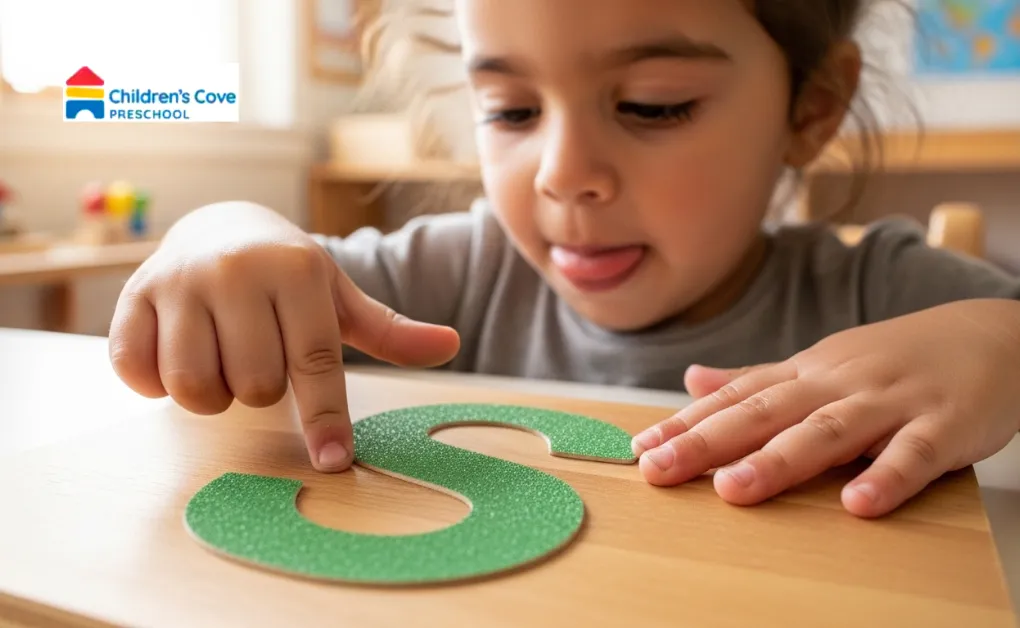
Once your child can notice and play with sounds, the next step is connecting those sounds to letters.
What you can do:
- Pick one letter a day and find 3 to 5 things at home that start with that sound: B → ball, bag, book, banana
- Say the sound out loud, not just the letter name. “Buh”, not just “bee”
- Use fridge magnets, printed cards, or just write letters on paper; keep it simple
Why this works: Understanding that letters represent sounds, not just shapes, is the foundation of reading. This kind of play builds that understanding naturally.
Watch out for this: Many parents focus on letter names before letter sounds. Knowing that B is called “bee” is less useful at this stage than knowing it makes a “buh” sound. Sounds first, names later.
5. Storytelling and “Tell Me About Your Day”
Getting your child to talk about their day does more than you might expect. It teaches them to organise their thoughts, sequence events, and put feelings into words.
What you can do:
- Ask: “What was your favourite part of today?”
- Help them if they get stuck:
- “Who were you with?”
- “What happened after that?”
- Take turns making up a short story together, even a completely silly one, works
Why this works: Speaking in full sentences and in the right order is a skill. The more your child practises expressing their thoughts, the clearer and more confident they become in both conversation and writing. It also helps them think more clearly, which you can support with simple problem-solving activities for preschoolers in everyday situations.
6. Pretend Play
Children often speak more freely when they’re not being directly asked to talk. Role play removes that pressure and makes real conversation feel like a game.
What you can do:
- Act out situations your child already knows:
- Ordering food at a hawker stall
- Taking the MRT
- Buying something at a shop
- Visiting the doctor
- Let your child lead and switch roles with them
Why this works: Pretend play gives children a safe space to practise conversations they’ll actually have in real life. It’s especially good for children who are usually quiet or take a while to warm up.
Why this works: Pretend play gives children a safe space to practise real-life conversations. It’s especially helpful for quieter children and also builds early number sense in a natural way. You can extend it easily into fun counting games for kids, keeping learning playful without making it feel like a lesson.
A small tip: If your child keeps doing the same scenario over and over, that’s fine; repetition builds confidence. Let them lead until they’re ready to try something new.
7. Drawing and Scribbling
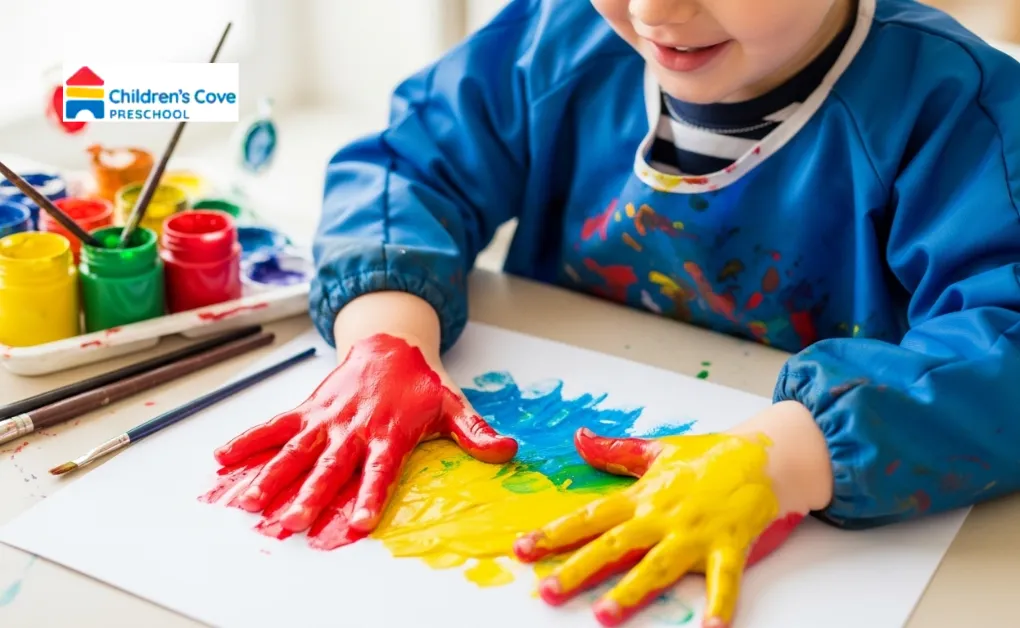
Writing doesn’t start with holding a pencil correctly or forming neat letters. It starts with making marks and understanding that those marks can mean something.
What you can do:
- Let your child draw or scribble freely, and resist the urge to correct
- Ask: “Tell me about your drawing”, and really listen to the answer
- Write their words next to the picture in your own handwriting so they can see it
Why this works: When you write down what your child says and show it to them, something clicks: the things I say can become words on paper. That understanding, that spoken language and written language are connected, is a big deal, and it starts here.
For a more structured approach, you can also explore how to improve literacy skills in students using proven strategies.
8. Reading the World Around You
This one requires no extra time at all. You’re already outside, already travelling, already shopping. Just bring words into it.
What you can do:
- Read signs, menus, and food labels together when you’re out
- Point out MRT station names during travel, “Dhoby Ghaut, can you find the D?”
- At the supermarket, ask: “Can you find something that starts with M?”
Why this works: One of the most important things a child can understand early is that reading isn’t just a school subject. Words are everywhere. They’re on buses, in menus, on cereal boxes. When your child sees you noticing and reading those words, they start doing it too.
Signs Your Child’s Language Skills Are Growing
You might not notice a big change all at once. It usually shows up in small, everyday moments.
Here are a few things you’ll likely start seeing:
- They begin using new words on their own: Sometimes you’ll hear a word you used earlier suddenly pop up, not always perfectly, but that’s a good sign
- They start asking more questions: Things like “What’s that?” or “Why is this like that?” come up more often, which means they’re trying to make sense of things
- They move beyond one-word answers: Instead of just saying “ball,” they might say something like “big ball” or “my ball”
- They try to tell you about something that happened: It might not be in perfect order, but they’ll make an effort to explain
- They show interest in words around them: Pointing at signs, recognising something from a book, or asking you to repeat a story again
Conclusion
At the end of the day, this isn’t about doing more or getting everything right. It’s about using the small moments you already have, reading a story, having a quick chat, playing together, and turning them into something meaningful.
All of these activities support language and literacy for preschoolers in a way that feels simple and natural. They help your child hear words more clearly, use them with confidence, and slowly understand how language works. You don’t need long sessions or perfect routines for that to happen.
If you keep showing up in these small ways, your child will keep picking things up, even when it doesn’t feel obvious right away.
That’s really how early reading and communication skills grow: quietly, over time, through everyday interactions.
FAQs
1. How much time do I need each day?
Not much. Around 10 to 20 minutes spread across the day is enough. A chat during lunch, a quick story, a short game, these small moments add up more than you’d think.
2. Does screen time help?
A little, but not much on its own. Videos and apps can introduce new words, but children learn language best by talking and responding in real time. Screens can’t replace that back-and-forth with you.
3. Will two languages confuse my child?
No. In Singapore, most children grow up hearing more than one language, and that’s actually a good thing. They might mix words at first; that’s normal, and it passes. Over time, knowing more than one language actually helps them think and learn better.
4. What kind of books should I choose?
Simple picture books with short sentences and clear illustrations. Topics like family, food, animals, or daily routines work well because your child already knows them. Repetition matters more than complexity at this age.
5. When will my child start reading on their own?
Every child is different. Some start recognising simple words around age 4 or 5; others take a little longer. At this stage, the goal isn’t to rush reading; it’s to build the love of stories and words. Independent reading grows from that.