The moment you bring your baby home, everything looks different. That cosy flat suddenly feels a little unfamiliar. Every sharp corner, loose wire, and open drawer seems to matter more than it used to.
And if you’ve caught yourself staring at your living room wondering, “Wait, is this actually safe for her?” You’re not overthinking it. You’re just paying attention.
Babies grow fast. One month they’re lying still, the next they’re rolling, reaching, and grabbing whatever’s nearby. New hazards can show up before you even notice them: plug points at eye level, blind cords within reach, a bottle of dishwashing liquid tucked just low enough for curious hands.
You don’t need to change your whole house to fix this. You just need to know where to look.
That’s what this guide covers, 13 simple tips for baby safety at home and outdoors, made for real homes in Singapore. HDB flats, condos, hot weather, help from grandparents or a helper. Small changes, made in minutes, that keep your little one safe.
13 Infant Safety Tips for Every Room in Your Home (Plus Outdoors)
Bedroom Safety: A Sleep Space You Can Trust
Tip 1: Use a Firm Mattress and Skip Soft Bedding
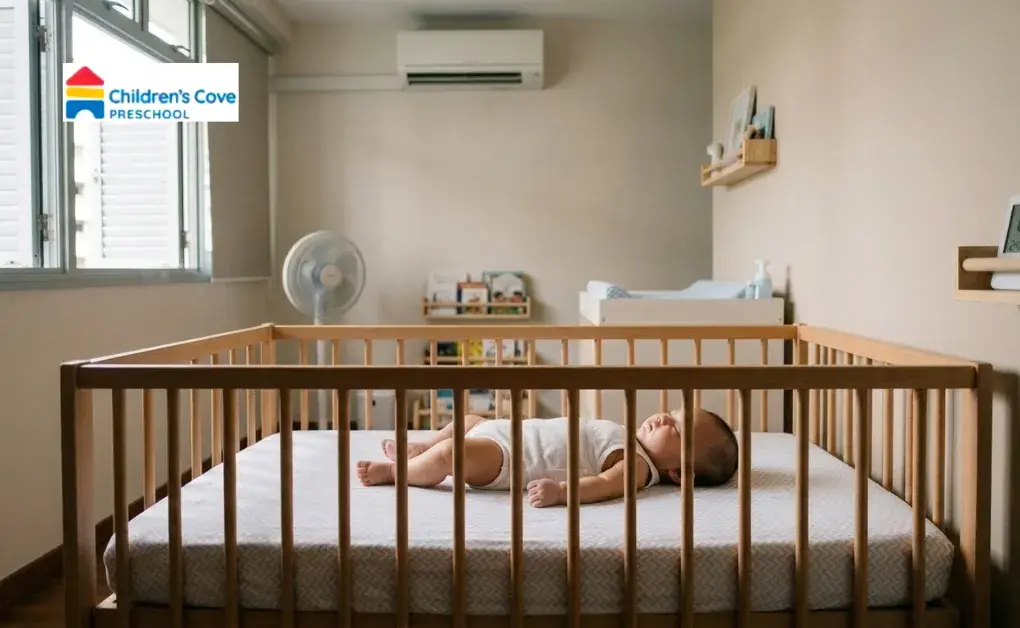
Your baby will spend more time sleeping than doing anything else in the first few months, so this setup deserves just as much attention as the rest of the room.
- Use a firm mattress, not a soft or bouncy one
- Skip pillows, blankets, and soft toys for now
- Stick to a fitted sheet, that’s all you really need
- Keep the room cool with a fan or air conditioner, but don’t point it straight at your baby
- Dress them in light, breathable clothes for the hot weather
Soft bedding can block a baby’s breathing without any warning, so less is always safer here.
Tip 2: Keep Blind Cords and Curtains Out of Reach
Many homes in Singapore, especially condos, come with blinds instead of curtains. They look neat, but the hanging cords can turn into a real hazard once your baby starts pulling up to stand or grabbing at anything nearby.
- Move the crib away from any windows with blinds or curtains
- Switch to cordless blinds if you can
- Tie up loose cords well out of sight
Five minutes of work gives you complete visual peace of mind every time you glance around the room.
Kitchen Safety: Keeping Curious Hands Out of Trouble
Tip 3: Lock Low Cabinets and Drawers
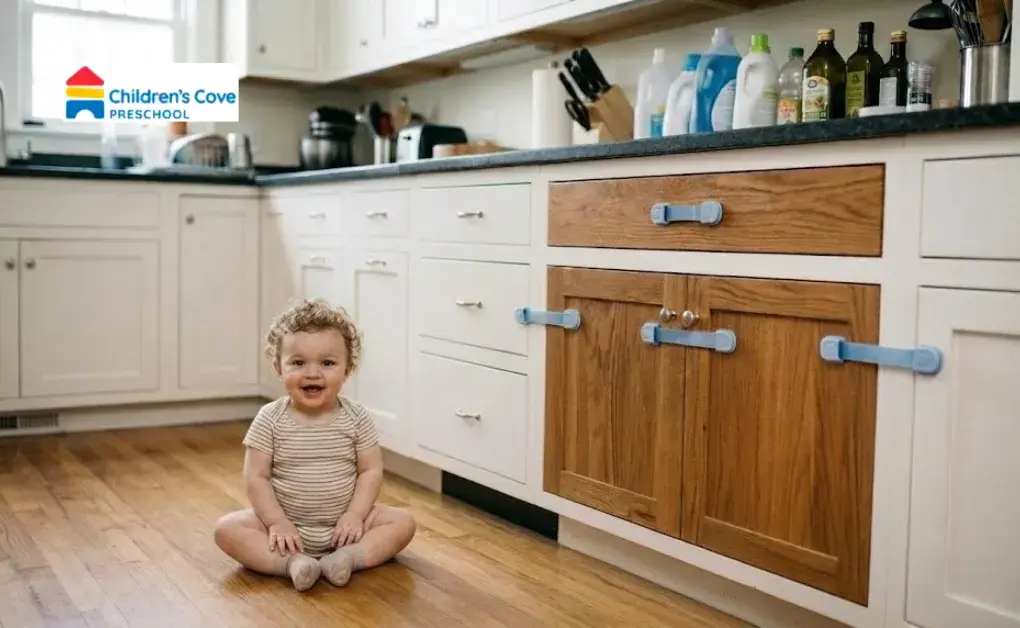
To a crawling baby, low cabinets and drawers look like the best room in the house to explore.
- Use childproof latches on low cabinets and drawers
- Keep cleaning agents, detergents, and sharp tools up on higher shelves
- Move anything hot, heavy, or breakable well above baby’s height
- Set aside one low cabinet with soft, safe items your baby can dig through freely
That last tip gives your baby something to open and play with, without you having to watch every second.
Tip 4: Watch for Choking Hazards on Counters and Floors
Babies put almost everything in their mouths, so anything tiny needs a second look, especially with snacks, spices, and stray items lying around.
- Coins, buttons, and loose utensil parts left on counters
- Button batteries from kitchen gadgets, these are especially dangerous if swallowed
- Toy or packaging pieces that end up in the kitchen by accident
- Loose parts on imported snacks or toys, always check before handing them over
Take a moment to scan the counters and floor before playtime starts.
Bathroom Safety: Water, Medicines, and Everyday Risks
Tip 5: Never Leave Baby Alone Near Water
Bathrooms feel routine to us, but they hold one of the biggest risks for babies water. A baby can be at risk in just a few centimetres of water, and it only takes seconds for something to go wrong.
- Never leave your baby alone in the bath, not even for a moment to grab a towel
- Empty pails and buckets right after use, don’t let them sit filled
- Keep the bathroom door closed when it’s not in use
- Use a non-slip mat inside the tub and on the floor
None of this takes extra time. It just means staying close and finishing what you start before stepping away.
Tip 6: Store Medicines and Toiletries Safely
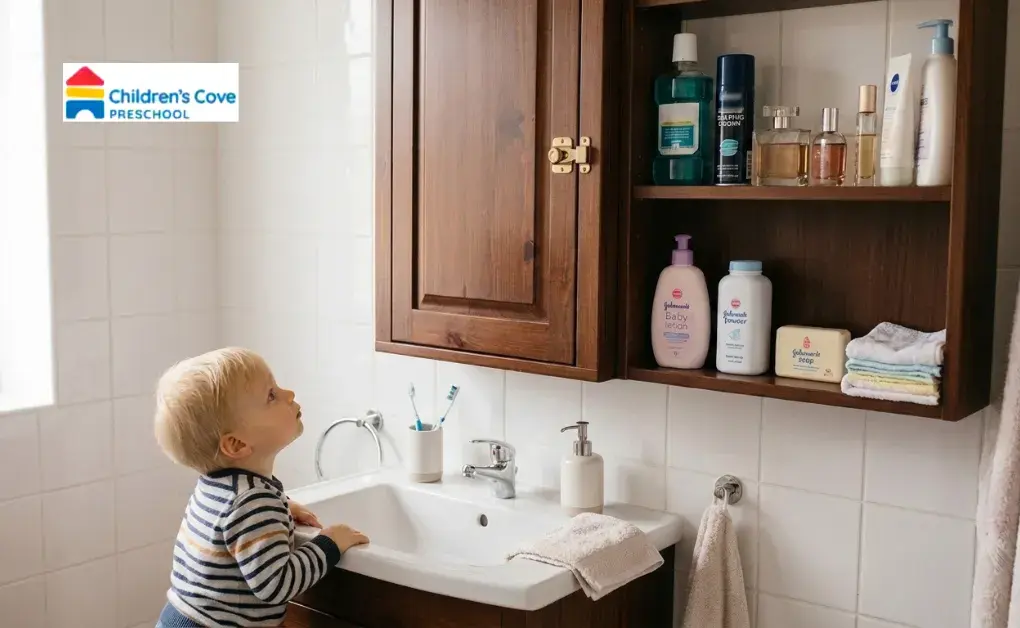
Bathroom shelves often hold a mix of things that look harmless to us but aren’t so harmless for a baby exploring with their hands and mouth: pills, mouthwash, shaving cream, perfume.
- Store medicines in a cabinet with a lock, not just an open shelf
- Keep adult toiletries and skincare separate from baby’s items
- Choose containers with child-safe caps where possible
- Recheck the shelf every time a new product comes into the house
A baby can’t tell what’s safe and what isn’t, so it’s up to us to sort that out for them.
Living Room Play: Furniture and Play Area Basics
Tip 7: Anchor Furniture to Prevent Tip-Overs
Babies love to grab, climb, and lean on things once they’re steady on their feet. In smaller HDB flats especially, a shelf or TV stand within reach can tip over with more force than you’d expect.
- Anchor tall shelves, cabinets, and the TV unit to the wall
- Move heavier decor items off low tables baby can reach
- Check that any furniture with wheels is locked in place
- Keep the TV pushed back, not perched on the edge of its stand
- Keep furniture away from windows and balcony railings, so baby can’t climb up to reach them
- Check that window grilles and locks are secure, especially in older flats
A wall anchor kit takes a few minutes to set up, the kind of small task that’s easy to forget until you actually do it.
Tip 8: Set Up a Padded, Hazard-Free Play Space
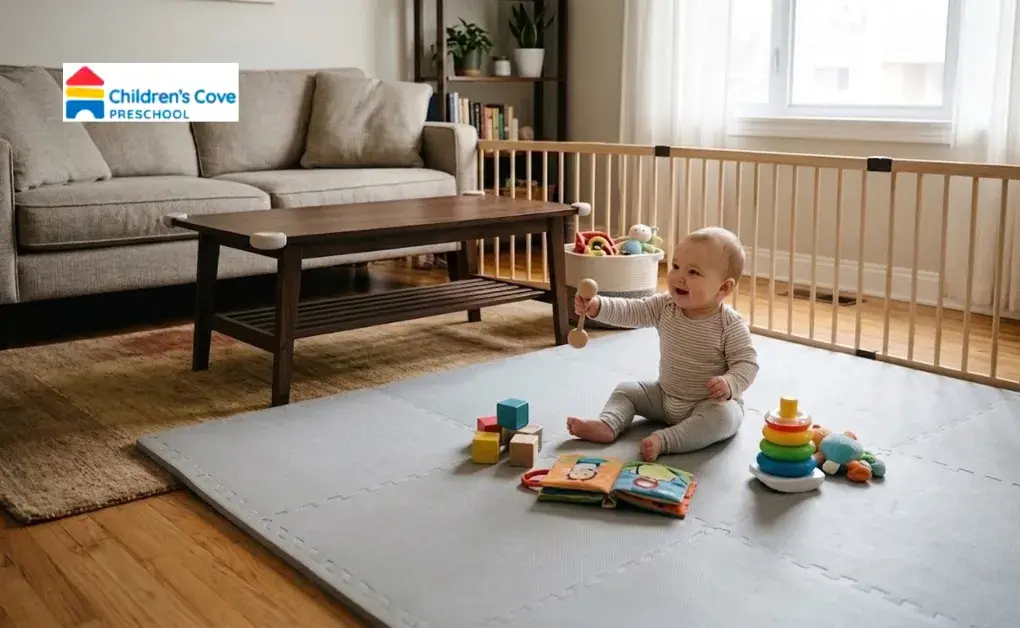
Babies need room to move, roll, and eventually crawl, and the living room is usually where that happens. Setting up one dedicated spot makes it easier to relax while they play.
- Lay down a soft mat or padded flooring for tumbles
- Add corner guards to coffee tables and sharp furniture edges
- Keep the play area away from stairs, entrances, and loose cables
- Rotate a small set of toys instead of leaving everything out at once
A clear, padded corner means fewer things to watch for, and more time to just enjoy watching them play.
Whole-Home Checks: Outlets, Wires, and Room Temperature
Tip 9: Cover Outlets and Tuck Away Loose Wires
To a baby moving around at floor level, outlets and loose wires sit at exactly the right height to grab attention.
- Fit outlet covers on every socket within arm’s reach
- Bundle loose wires and tuck them behind furniture
- Keep an eye on extension cords, especially near the TV or aircon unit
- Unplug appliances you’re not using instead of leaving cords dangling
These covers cost very little, and the whole job usually takes less time than one nap.
Tip 10: Keep the Room Cool Without Overdoing It
Singapore’s heat means most homes run the aircon or a fan for most of the day. But babies can’t regulate their body temperature the way adults do, so the air around them deserves a little extra thought.
- Set the aircon to a mild, consistent level rather than too cold
- Keep fans and aircon vents pointed away from baby’s crib or play area
- Let fresh air in when the weather allows, instead of running the aircon all day
- Dress baby in breathable fabrics suited to the indoor temperature
The right room temperature does more for a good night’s sleep than most people realise.
Outdoor Safety: Prams, Car Seats, and Playground Time
Tip 11: Buckle Up and Lock Wheels on Prams and Strollers
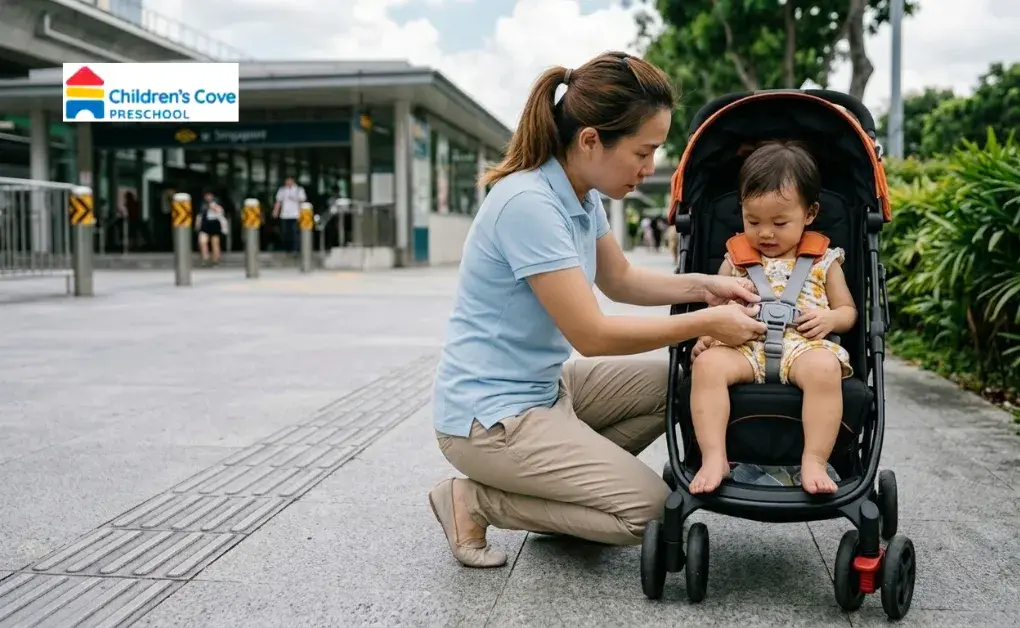
Getting out of the house is good for both of you, but Singapore’s streets, walkways, and MRT stations come with their own set of things to think about once a baby is in a pram.
- Buckle the harness every time, even for a short walk downstairs
- Lock the wheels whenever the pram is stopped, especially near slopes or escalators
- Keep the pram away from the platform edge while waiting for the train
- Check the brakes before stepping onto a lift or ramp
The harness takes two seconds to buckle, and it’s the single most important step here.
Tip 12: Use a Proper Car Seat, Every Single Ride
Whether you’re driving, grabbing a taxi, or booking a private hire car, your baby should travel in a properly installed infant safety seat whenever possible, even for short journeys.
- Choose a seat that matches your baby’s age and weight
- Install it facing the back seat until your baby is old enough to switch
- Book a taxi or ride service with a car seat option if you don’t have your own
- Avoid holding your baby on your lap in a moving vehicle
Skipping this, even once, isn’t worth the risk.
Tip 13: Guard Against Heat, Sun, and Playground Injuries
The hot weather can turn a fun outing into an uncomfortable one fast, and playgrounds bring their own bumps and bruises once your baby is old enough to climb and slide.
- Bring a hat, light clothing, and shade cover for prams or carriers
- Offer water regularly if your baby has started on solids and fluids
- Feel the playground equipment for hot surfaces before letting baby sit or touch it
- Keep within arm’s length during playground time, especially on slides and climbing frames
Outdoor time is more fun when you’re not caught off guard by the heat or the equipment.
Confinement Period Safety Tips for Singapore Families
Many families follow confinement practices in the weeks after a baby arrives, often with a confinement nanny, grandparents, or other family members helping out at home. With so many hands involved, it’s worth setting a few safety habits early on. If you’re also weighing up what infant care involves once confinement ends, it helps to have these home safety basics already in place.
- Make sure everyone caring for baby follows the same basics, from safe sleep to handling
- Keep traditional items like heat lamps, herbal steamers, or heating pads a safe distance from baby’s sleeping area
- Agree on one spot for baby’s essentials so nothing gets missed between caregivers
- Wash hands before handling baby, especially with visitors coming and going during this period
As your confinement period comes to an end, many families also begin planning for the next stage of care. Since infant care places in Singapore can fill up quickly, it’s worth registering early. Here’s when to register for infant care, so you can plan ahead without a last-minute rush
Conclusion
Look back at everything we’ve covered, and it’s really just this: a firm mattress in the bedroom, latched cabinets in the kitchen, a locked door in the bathroom, anchored furniture in the living room, covered sockets around the house, a buckled harness outdoors, and a few extra habits during confinement. Thirteen small fixes, spread across the rooms your baby will grow up in.
None of it needs to happen in one weekend. Baby-proof one room this week, another the next, and by the time your little one is crawling, climbing, and pulling up on everything nearby, you’ll already be a few steps ahead.
You don’t need a perfectly baby-proofed home. You just need to know where the risks hide, and that’s exactly what this guide walked you through, room by room.
Safety was never going to be one big project. It’s a string of small choices, made consistently, by everyone who cares for your baby.
Children’s Cove infant care programme follows the same approach as this guide, safe sleep, secure spaces, and caregivers who pay attention to the small stuff. As a preschool in Singapore, the same attention to detail carries into every stage of a child’s early years.
FAQs
1. At what age should I start baby-proofing my home?
Most parents start around 4 to 6 months, right before babies get more mobile and start exploring with their hands. It’s smart to have the basics in place early, since babies pick up new skills faster than most people expect.
2. Is it safe to co-sleep with my baby in a Singapore HDB flat?
Co-sleeping is common in many households, especially in compact homes, but doctors generally recommend sharing the room without sharing the bed, since this lowers the risk of accidental harm during sleep. A crib or bassinet placed next to the parents’ bed is usually the safer choice.
3. How do I know if my baby’s crib or cot meets safety standards in Singapore?
Look for cots with slats spaced closely enough that a baby’s head can’t slip through, and a mattress that fits snugly with no gaps at the edges.
4. What should I do if my baby swallows something small?
Stay calm and check if your baby is coughing, choking, or having trouble breathing. If breathing seems fine, keep an eye on them and call a doctor. If they’re choking or struggling to breathe, seek emergency help right away.
5. Is it safe to leave my baby with a helper or grandparent alone at home?
Yes, as long as the caregiver knows the same routines you follow, especially around sleep, feeding, and staying close near water or stairs. Writing out a simple list of house rules for anyone else caring for baby can help keep everyone on the same page.