Fine Motor Skills Activities for preschoolers are essential before a child learns to write their name, hold a pencil correctly, or button a school uniform. These small movements involve the fingers, hands, and wrists working together to complete everyday tasks such as drawing, cutting, picking up small objects, and managing simple self-care activities.
Many parents focus on letters, numbers, and early academics, but hand strength and coordination are just as important for preschool readiness. Children who have regular opportunities to practise these skills often find it easier to participate in classroom activities that involve writing, art, and hands-on learning.
In Singapore, where many families live in apartments with limited space, simple activities at home and outdoor play can provide valuable opportunities to develop these skills naturally. From playdough and threading to gardening and sand play, children can strengthen hand control, improve coordination, and build confidence through everyday experiences.
In this guide, we share 10 practical fine motor skills activities that parents can easily try at home or outdoors to support their child’s development in a fun and engaging way.
5 Essential Indoor Fine Motor Skills Activities
These simple indoor activities are easy to set up and can be adapted for different age groups and skill levels.
1. Playdough Strength Building Activity
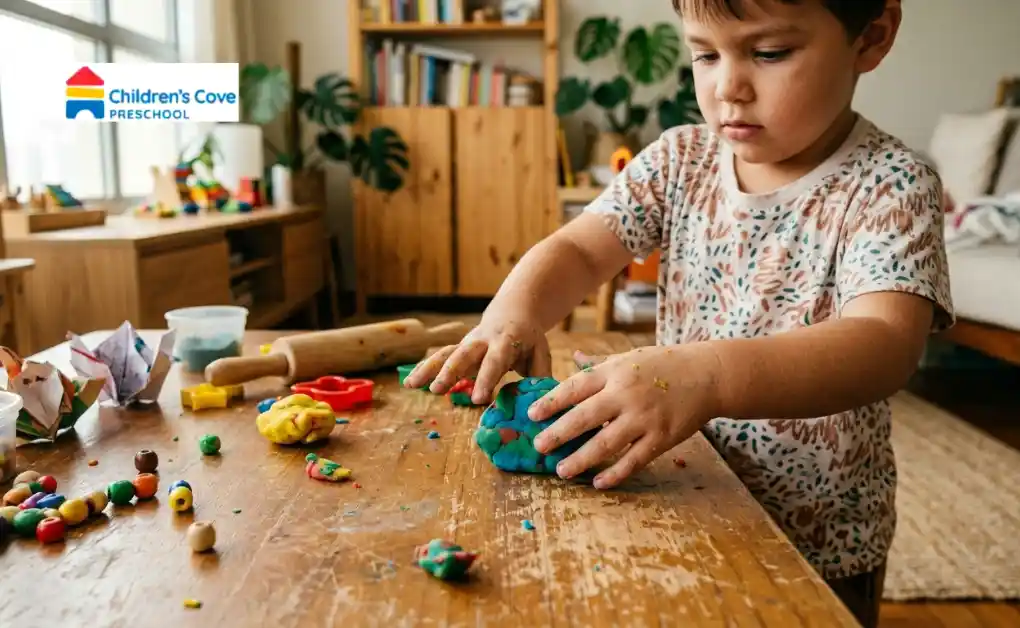
If you have playdough at home, this is one of the easiest ways to help your child strengthen their fingers and practise hand control. It works especially well for children aged 2–5, who often enjoy squeezing, rolling, and shaping objects with their hands.
How to do it:
Give your child playdough and encourage them to:
- Roll it into small balls or long snakes
- Squeeze and squash it using their hands
- Flatten it using palms or fingers
- Shape it into simple objects like animals or food
- Use a fork or spoon to press patterns into the dough
2. Sticker Peeling and Craft Activity
Many young children love stickers, making this activity both simple and engaging. With just stickers, paper, and glue, your child can create pictures while practising careful finger movements and hand-eye coordination.
How to do it:
Ask your child to:
- Peel stickers carefully using their fingers
- Pick and hold stickers without tearing them
- Place stickers on paper to create simple shapes or pictures
- Arrange stickers to form patterns or designs
- Make a small collage using different stickers
3. Bead Threading and Lacing Activity
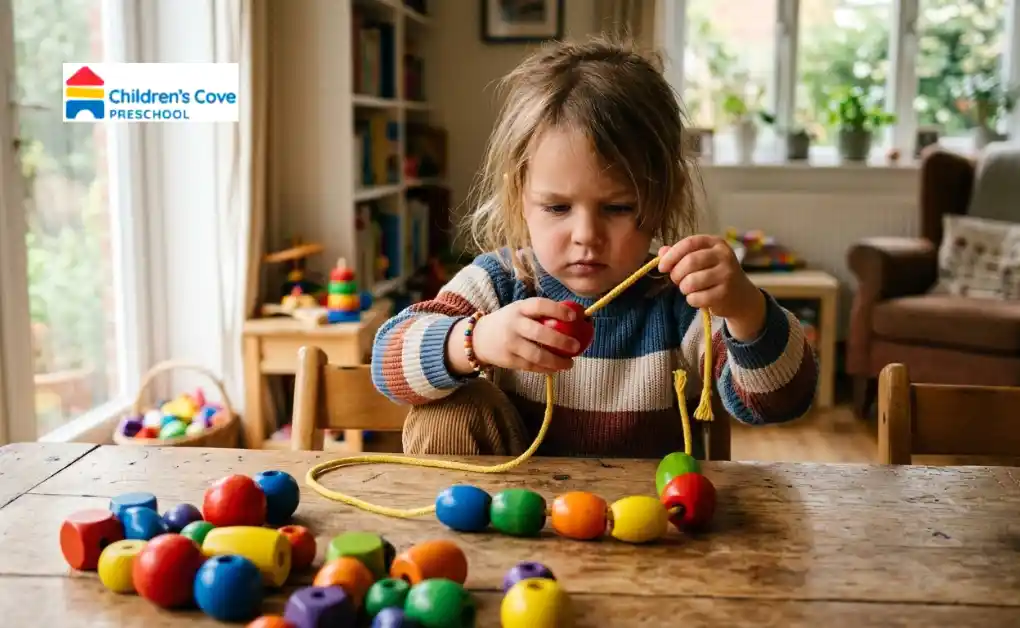
This activity is usually best for children aged 3–6, as it requires a little more focus and control. Using beads, pasta, or buttons and a piece of string, they can practise coordination while creating simple patterns.
How to do it:
Show your child how to thread beads onto a string and let them:
- Pick up beads one by one
- Insert beads onto a string or lace carefully
- Start with large beads before moving to smaller ones
- Create simple patterns using different colours or shapes
- Repeat the threading process to build focus
4. Child-Safe Scissor Cutting Activity
If your child enjoys arts and crafts, this is a great activity to introduce. A pair of child-safe scissors and a few sheets of paper are enough to help them practise an important skill they’ll use throughout preschool.
How to do it:
Teach your child how to hold scissors properly and encourage them to:
- Hold scissors with correct finger placement
- Open and close scissors slowly
- Cut straight lines on paper first
- Move on to simple shapes like squares and circles
- Follow drawn lines carefully while cutting
5. Tweezer Sorting Activity
Older preschoolers, particularly those around 3–5 years old, often enjoy the challenge of picking up small objects with tweezers. This simple activity helps build the finger control needed for tasks such as holding a pencil later on.
How to do it:
Ask your child to use tweezers and encourage them to:
- Pick up small objects using tweezers
- Transfer items into bowls or containers
- Sort objects by colour, size, or type
- Move items one by one with control
- Repeat the activity to strengthen their grip
5 Essential Outdoor Fine Motor Skills Activities
Outdoor play gives children the chance to develop fine motor skills while exploring the world around them. These simple activities for kids make use of parks, playgrounds, gardens, and open spaces to promote active learning, creativity, and hands-on discovery.
6. Nature Collection and Sorting Activity
Take your child for a walk in the park or around your neighbourhood and let them collect small natural items like leaves, stones, flowers, or sticks. This activity is great for children aged 2–6 and helps them slow down, observe details, and use their hands carefully while exploring nature.
How to do it:
- Collect leaves, stones, flowers, or sticks
- Pick items carefully from the ground
- Carry collected items safely in hands or a small bag
- Sort items by size, colour, or shape
- Compare different natural objects
7. Gardening Activity for Little Hands
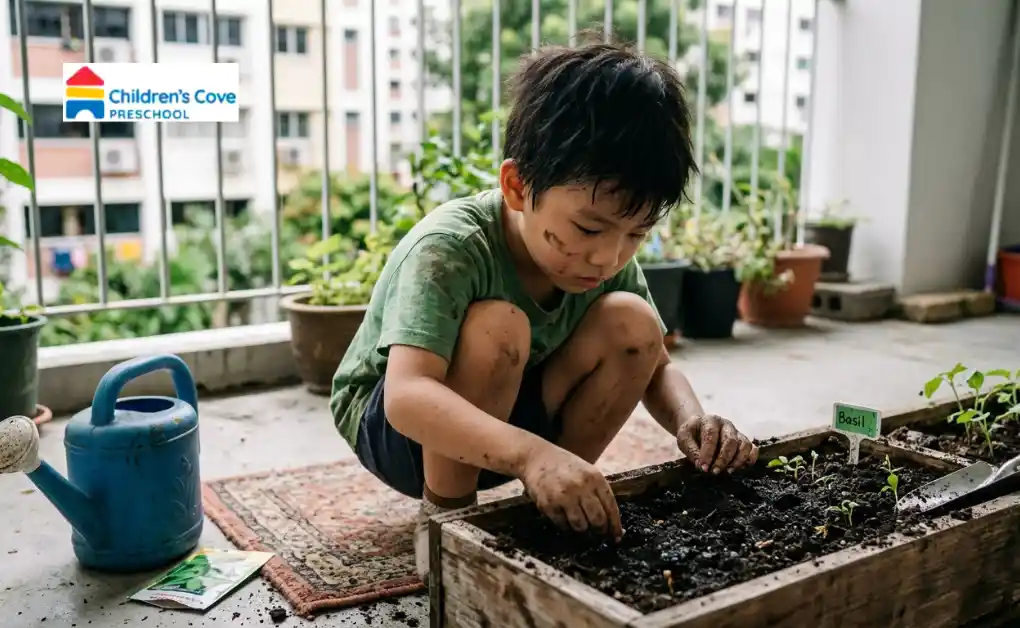
Gardening is a hands-on way for children to build strength and responsibility. With a little soil, seeds, and a watering can, children aged 3–6 can enjoy digging, planting, and taking care of plants while improving hand control.
How to do it:
- Dig soil using hands or small tools
- Place seeds into the soil
- Cover seeds gently with soil
- Water plants carefully using a small watering can
- Observe plant growth over time
8. Sidewalk Chalk Drawing Activity
Sidewalk chalk is a simple way to build creativity and strengthen hand muscles at the same time. Children aged 2–6 can draw freely on the ground, practice shapes and lines, and even start early writing practice in an open space.
How to do it:
- Hold the chalk using fingers with a proper grip
- Draw lines, circles, and simple shapes
- Practice writing simple letters or patterns
- Fill empty spaces with drawings
- Experiment with different strokes and pressure
9. Sand Play and Moulding Activity
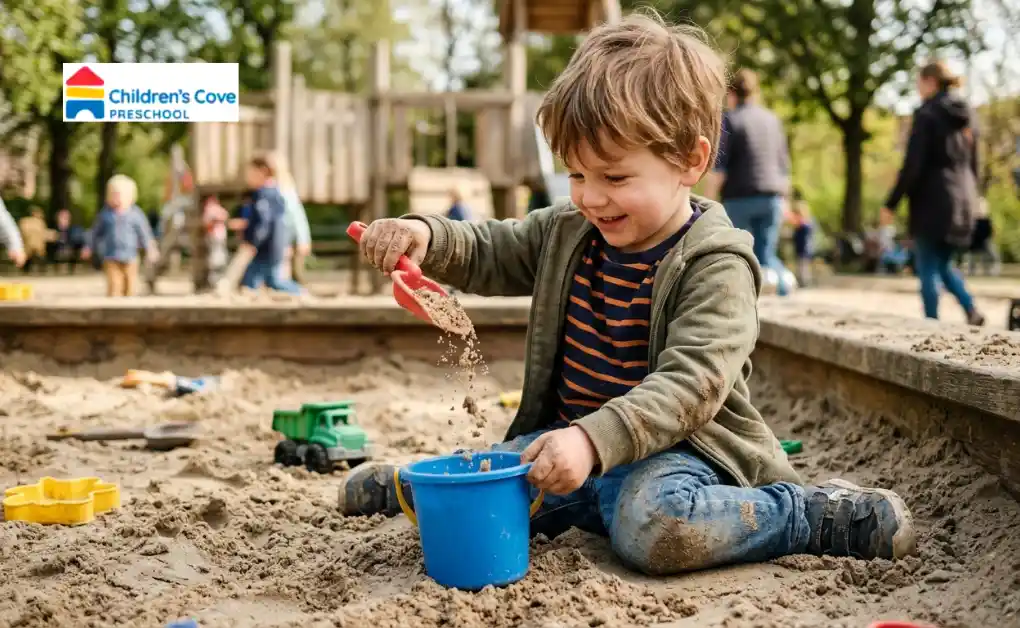
Sand play is a favourite for many children because it lets them scoop, pour, build, and shape freely. It supports coordination and fine motor development for children aged 2–6 using simple tools like buckets and scoops.
How to do it:
- Scoop and pour sand using hands or tools
- Fill and empty buckets or containers
- Build simple sand shapes or castles
- Press patterns using hands or objects
- Mix and reshape sand freely
10. Water Transfer Activity
Water play helps children improve focus, control, and precision through simple pouring activities. It is best for children aged 3–6 and can be done with cups, spoons, and any safe water containers outdoors.
How to do it:
- Pour water from one container to another
- Use spoons or cups to transfer water
- Fill containers without spilling too much
- Repeat pouring for better control
- Experiment with different container sizes
How Preschool Programmes Support Fine Motor Skills
Preschool programmes naturally build fine motor skills through daily classroom routines and guided play. Instead of treating it as a separate lesson, children practise these skills through hands-on experiences they enjoy.
At Children’s Cove, activities like cutting, threading, kneading, and mark-making are part of everyday learning through our Building Blocks programme. These tasks are designed to give children regular practice with simple hand movements in a structured environment.
Children also learn in Exploration Zones, where they learn through open-ended play. These spaces allow them to explore materials, try different ways of doing things, and build confidence while using their hands in meaningful ways.
Conclusion
Fine motor skills develop gradually through regular play and everyday activities. When children are given time and space to explore with their hands, these abilities improve naturally as part of their daily routine.
With steady practice and encouragement, children become more comfortable with tasks that involve using their hands in early learning settings.
If you would like to learn more about how we support your child’s development, feel free to book a school tour and see how Children’s Cove encourages learning through structured, play-based experiences.
FAQs
1. What is the best age to start preschool activities for fine motor skills?
Most children can start simple fine motor activities from around 18 months to 2 years old, with skills gradually developing through early childhood before preschool begins.
2. How long should fine motor activities be done each day?
Short sessions of around 10 to 20 minutes are usually enough for young children, as they learn best through short and repeated play-based activities.
3. What causes delayed fine motor skills in children?
Delayed development can be linked to limited hands-on play, low muscle strength, lack of practice with small objects, or spending too much time on screen-based activities.
4. Are fine motor skills linked to speech or brain development?
Yes, fine motor skills are connected to early brain development, especially areas that support coordination, focus, and early learning abilities.
5. When should parents be concerned about fine motor skill development?
Parents may seek guidance if a child consistently struggles with basic tasks like holding objects, scribbling, or using both hands together by preschool age.