Confused about when your child should start preschool? You’re not alone. With so many stages, playgroup, pre-nursery, N1, and K1, it’s easy to feel unsure which stage best fits your child’s age and needs.
In Singapore, the preschool age typically spans from 18 months to 6 years, covering key early learning stages such as playgroup, pre-nursery, and nursery. Each stage helps children grow socially, emotionally, and academically in their own time.

This guide breaks down the different preschool stages so you can choose confidently and give your little one the right start.
Preschool Age in Singapore: Understanding the Early Learning Stages
Every child develops at their own pace, but Singapore’s preschools are structured to match each child’s age range with experiences that nurture curiosity and confidence. Knowing what happens at every stage, from playgroup age to K2, helps parents choose a programme that fits their little one’s needs.
Playgroup & Pre-Nursery (18 months – 3 years)

The playgroup age (18 months to 2 years) marks the beginning of your child’s learning journey, during which development occurs through touch, sound, and play. During this time, sensory activities, music, and movement help build coordination, social skills, and curiosity. As children move into pre-nursery (2 to 3 years), they begin to enjoy more routine and structure through storytelling, sing-alongs, and creative play like finger painting or block stacking. Their vocabulary expands rapidly, and they start expressing needs and ideas more clearly, building confidence and laying a strong foundation for future learning.
Nursery 1 (N1, 3 – 4 years)

During the N1 age, children thrive on guided play and hands-on discovery. At this nursery age in Singapore, teachers introduce counting, colours, and early phonics through games, stories, and art. Children start forming friendships, understanding simple rules, and working together in small groups. This stage also strengthens emotional skills; they learn patience, empathy, and self-expression as they explore the world around them.
Nursery 2 (N2, 4 – 5 years)
By this nursery age, children show stronger independence and curiosity. Lessons become slightly more structured, with activities that promote problem-solving, creativity, and logical thinking. In many nursery-age Singapore programmes, children practise writing letters, identifying patterns, and expressing thoughts through show-and-tell or drama play. Their social confidence grows as they take part in group projects and learn to collaborate with others.
Kindergarten 1 (K1, 5 years) and Kindergarten 2 (K2, 6 years)

The final preschool years prepare children for the transition to Primary 1. K1 focuses on literacy and numeracy basics, recognising words, reading short sentences, and writing simple phrases. In K2, children apply these skills more independently as they explore science, culture, and nature through projects and discussions. These years balance academics with creativity, helping preschool children stay curious and confident as they step into formal schooling.
While age categories provide structure, remember: development isn’t a race. The right preschool supports your child’s emotional and cognitive growth, helping them enjoy learning at their own rhythm.
Why the Preschool Years Matter So Much
The preschool age in Singapore is among the most critical stages of a child’s growth. During these early learning years, your child’s brain forms millions of new connections, a time when curiosity, language, and imagination develop rapidly.
A good preschool goes beyond teaching letters and numbers. It builds emotional strength, independence, and a love for learning. Through play-based learning, preschool children learn to cooperate, share ideas, and express themselves with confidence, creating a solid base for future academic and social success.
At this stage, children discover who they are and how the world works. They learn to manage emotions, solve challenges, and show empathy, skills as valuable as academics. That’s why choosing the right preschool in Singapore is key. A nurturing environment encourages curiosity, confidence, and resilience, helping every child grow brighter, happier, and more adaptable.
Key Developmental Milestones During Preschool Age
Between the playgroup and nursery age, children experience some of the most remarkable growth and transformation. The preschool age in Singapore, which typically spans from 18 months to 6 years, is when young learners begin to develop essential skills that shape their thinking, emotions, and relationships.
Here are the main areas of development parents can observe during these early years:

Cognitive Development:
Children start recognising shapes, colours, letters, and numbers, and they begin to make sense of patterns and simple problem-solving tasks. Their curiosity grows stronger, leading to endless “why” questions about everything they see. These moments of exploration help build their reasoning, memory, and understanding of cause and effect.
Language and Communication:
As your child moves from playgroup to nursery age, their vocabulary expands rapidly. They begin forming longer sentences, expressing ideas more clearly, and following short stories with interest. Teachers often encourage conversations and storytelling to nurture their listening and speaking skills, which later form the foundation for reading and writing.
Social and Emotional Growth:
During this stage, children learn how to make friends, share toys, and take turns. They start to understand their own emotions and recognise how others feel. These experiences build empathy, cooperation, and self-confidence, qualities that help them adjust smoothly when they eventually transition to primary school.
Physical Development:
Preschool children also make significant progress in physical coordination. They develop stronger gross motor skills through running, climbing, and outdoor play, while activities like drawing, cutting, and stacking blocks refine their fine motor control. These skills are vital for everyday tasks such as dressing, feeding, and writing.
While every child’s journey is unique, a nurturing preschool environment plays a key role in guiding this development. Through a balance of play, structure, and encouragement, children gain the confidence to explore, communicate, and grow at their own pace.
How to Know if Your Child Is Ready for Preschool
Many parents wonder when the right time is to start preschool. While the preschool age in Singapore usually begins around 18 months, readiness depends more on your child’s comfort, curiosity, and independence than on a specific age.
Children are often ready for playgroup or pre-nursery when they start showing signs like these:
- Interest in other children: Enjoys watching or joining group play.
- Follows simple instructions: Understands short directions such as “pick up your toy” or “sit down.”
- Expresses needs clearly: Uses words or gestures to communicate hunger, emotions, or discomfort.
- Basic independence: Can eat, wash hands, or put on shoes with little help, ideal for pre-nursery age Singapore settings.
- Curiosity about new places: Feels comfortable exploring new spaces and activities, a good sign for playgroup Singapore readiness.
Every child develops at their own pace. Some may be ready earlier, others may need more time, and that’s perfectly fine. What matters most is that your child feels safe, curious, and excited to explore their preschool world.
Helping Your Child Adjust to Preschool Life
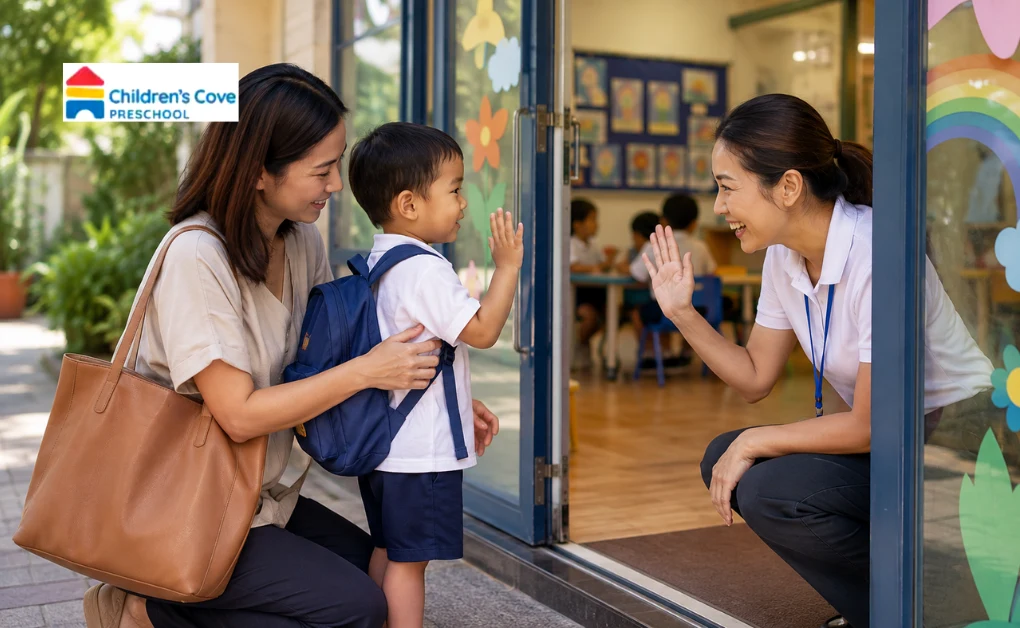
Starting preschool is a significant milestone, not just for children but also for parents. It’s normal for the first few days to come with a mix of excitement and a few tears. The good news is that most preschool children adapt quickly once they feel safe and supported.

Here are a few gentle ways to make the transition smoother:
- Build a routine early: Begin setting a regular schedule for meals, naps, and bedtime before school starts. A familiar rhythm helps children feel secure and prepared for daily routines in preschool Singapore.
- Visit the school together: Let your child explore the classroom and meet the teachers. Familiar faces and spaces reduce anxiety on the first day.
- Talk positively about school: Share stories about fun activities, new friends, and caring teachers to create excitement and curiosity.
- Encourage small acts of independence: Simple habits like packing their bags, dressing, or tidying up help children gain confidence and adjust more quickly.
- Stay calm and consistent: Goodbyes can be emotional, but showing confidence reassures your child that school is a safe, happy place.
Adjustment takes time, but with patience and encouragement, your child will soon feel comfortable, confident, and ready to enjoy their preschool journey.
Conclusion
The preschool age in Singapore is a wonderful stage of discovery and growth. From the first days of playgroup to the independence of nursery age, every experience helps children build confidence, creativity, and a love for learning.
Early education isn’t about rushing ahead; it’s about giving your child space to explore, play, and grow at their own pace. The right preschool nurtures both heart and mind, helping children feel curious, capable, and confident as they take their first steps toward the future.
With your love, patience, and encouragement, these early years can become the foundation of a lifelong journey filled with joy, learning, and endless possibilities.
FAQs
1. What is the difference between preschool and childcare in Singapore?
In Singapore, preschool focuses mainly on education for children aged 3 to 6, usually in half-day programmes. Childcare centres cater to a wider age group, from infants to preschoolers, offering full-day care and learning to support working parents.
2. What are the 4 C’s of positive parenting?
The 4 C’s stand for Connection, Communication, Consistency, and Confidence. They remind parents to connect emotionally, communicate calmly, stay consistent with rules, and build their child’s confidence through encouragement and empathy.
3. What is the difference between preschool and Pre-K?
In Singapore, preschool includes all stages from playgroup to Kindergarten 2. Pre-K, short for pre-kindergarten, usually refers to the year before formal schooling, similar to Kindergarten 1 or 2 in Singapore’s system.
4. How much does preschool cost in Singapore?
The cost of preschool Singapore varies widely depending on location, type, and hours:
- MOE Kindergartens: Around S$160 – S$180 per month for Singapore citizens.
- Private Preschools: Roughly S$800 – S$2,000+ per month.
- Childcare Centres: Full-day programmes typically range from S$700 – S$2,500+ per month, with subsidies available for eligible families.
5. What is the pre-nursery age criteria in Singapore?
Most schools set the pre-nursery age criteria at 2 years old by January of the enrolment year. However, some flexibility exists; it’s best to check directly with the school as entry ages can vary slightly.