It’s 10 pm, and you’re scrolling through a mum group on WhatsApp, wondering if your three-year-old is really ready for preschool. You’re not alone. Almost every parent in Singapore hits this moment right before registration season, staring at forms and second-guessing everything about their child.
That’s why we put together this preschool readiness checklist: it shows what Singapore preschools truly look for, based on real developmental milestones, not academic drills. Your child doesn’t need to be perfect. They just need a handful of key skills, and this guide walks you through each one.
The Preschool Readiness Checklist
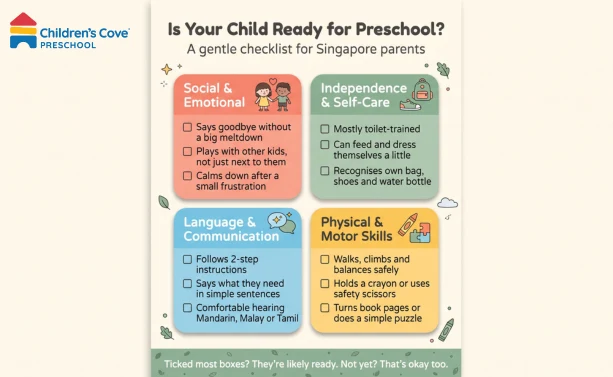
Every child grows at their own pace, so think of this less as a test and more as a gentle guide. If your child ticks most of these boxes, they’re likely ready. If not, that’s okay too. We’ll cover what to do next in the following section.
Social & Emotional Readiness
Settling into preschool isn’t just about handling goodbyes calmly. It’s also about how your child gets along with other kids and bounces back from small upsets during the day. Here’s what to look out for:
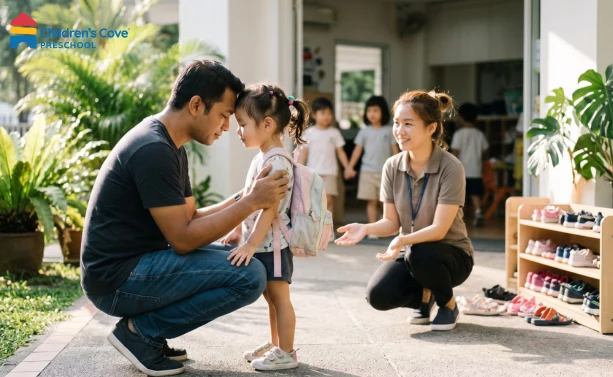
- Can they say goodbye without a big meltdown?
- Do they play with other kids, or just next to them?
- Can they calm down on their own after a small frustration?
Independence & Self-Care
A typical preschool class has one teacher looking after many children, so daily routines run smoother when kids can manage small tasks on their own. Your child doesn’t need to be fully independent, just able to try before asking for help. Ask yourself:
- Are they mostly toilet-trained?
- Can they feed and dress themselves a little?
- Do they recognise their own bag, shoes, and water bottle?
Language & Communication
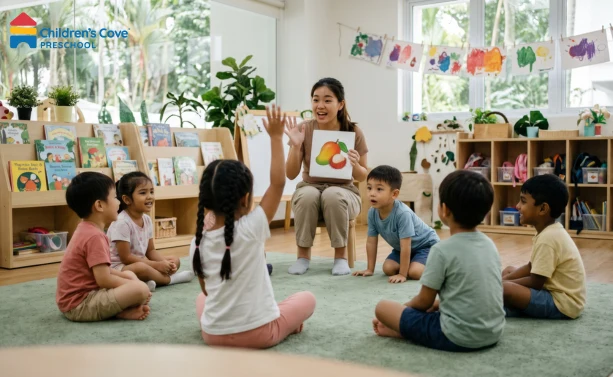
Your child doesn’t need a big vocabulary to start preschool, but they should understand simple instructions, express basic needs, and stay comfortable even when a second language is spoken around them. Check if they can already do this:
- Can they follow 2-step instructions, even in a noisy room?
- Can they say what they need in simple sentences?
- Are they okay hearing Mandarin, Malay, or Tamil in class?
Physical & Motor Skills
These skills usually build up on their own through everyday play at home, climbing at the playground, or scribbling with crayons. There’s rarely a need to sit down and “train” for this one. A quick way to check:
- Can they walk, climb, and balance safely on their own?
- Can they hold a crayon or use safety scissors?
- Can they turn book pages or do a simple puzzle?
Still working on the crayon grip or the scissors? A few simple fine-motor activities for preschoolers can help close that gap before Day 1.
Not Ready for Preschool Yet? Here’s What to Do
If your child didn’t tick many boxes on the checklist, take a breath. This is far more common than most parents realise, and it doesn’t mean anything is wrong. It just means they need a bit more time and a little practice with the right skills.
What if my child still clings to me at drop-off?
This is one of the most common worries among Singapore parents, and it usually passes with time. Separation anxiety is completely normal, and gradually introducing short periods of separation at home, like leaving them with a grandparent for an hour, helps children build comfort before their first day of preschool. This aligns with MOE’s Nurturing Early Learners (NEL) framework: helping children build trust and self-awareness before anything academic begins. Let them know you’re leaving instead of sneaking away, since sudden disappearances often make clinginess worse than a clear, calm goodbye.
How do I build these skills at home before Day 1?
You don’t need a strict training plan. Small daily habits work better than one big push. Let them practise using the toilet on their own, even if it takes longer than helping them. Give them simple two-step instructions during playtime, like “pick up the toy and put it in the box.” Let them attempt buttons, zips, or shoes, even if they get it wrong the first few tries.
Key Dates, Documents & Health Checks You Can’t Miss
Once you know your child is ready, a bit of paperwork stands between you and their first day. Sort this out early so nothing catches you off guard.
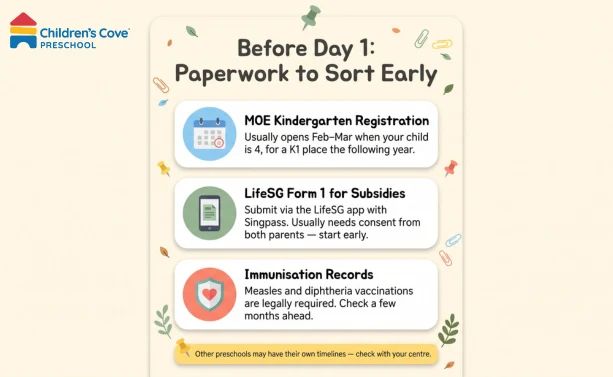
Registration Dates for MOE Kindergarten
MOE Kindergarten registration usually opens in February or March each year, when your child is 4, for a K1 place the following year when they turn 5. Other preschools may have their own registration timelines and admission requirements. If you’re unsure where to start, the ECDA preschool enrolment process can help you understand the general steps before you contact your preferred centre.
LifeSG Form 1 for Subsidies
If you’re applying for preschool subsidies, ECDA uses LifeSG Form 1 to process your application, which you submit through the LifeSG app using your Singpass. It covers your household and income details and usually requires consent from both parents, so it’s worth starting early rather than leaving it to the last minute.
Immunisation Records
Most preschools ask for your child’s immunisation records before their first day. In Singapore, vaccinations against measles and diphtheria are legally required, while the rest of the National Childhood Immunisation Schedule is strongly recommended. It’s a good idea to check this a few months ahead in case any jabs are due.
Getting Your Home Routine School-Ready
Preschool isn’t just a new place; it’s a new daily rhythm. The easier this shift feels at home, the smoother it’ll go once school starts.
Adjusting Nap Times for Preschool
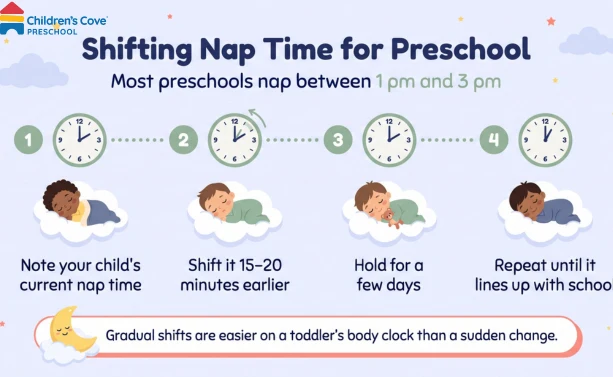
Most preschools schedule nap time around early afternoon, usually between 1 pm and 3 pm. If your child naps at a very different time right now, start shifting it earlier by 15 to 20 minutes every few days, rather than changing it all at once. Gradual shifts are much easier on a toddler’s body clock than a sudden change.
Getting Used to Earlier Mornings
School mornings often start earlier than your child is used to at home, and the morning rush can be stressful for both of you. A couple of weeks before their first day, try waking them up at the actual school time and run through the full routine, breakfast, dressing, and the trip to school, so it feels familiar instead of chaotic on Day 1.
Weaning Off Bottles and Pacifiers
If your child still relies on a bottle or pacifier during the day, preschool is a natural point to start phasing them out, since most classrooms don’t allow them. If this doesn’t apply to your child, feel free to skip this one. If this does apply, start with the easiest time of day to drop first, like during play, before moving on to nap time or bedtime.
Preschool Worries Every Parent Has, and How to Handle Them
Even after all the preparation, a few worries tend to stick around. Here’s some honest reassurance for the most common ones.
What if my child isn’t toilet-trained yet?
Most preschools understand that toilet training takes time, and teachers are used to helping children through it. If your child is close but not fully there, let the school know beforehand so they can support your child the same way you would at home.
What if we speak mostly English at home?
This is completely normal for many Singapore families, and preschools are used to it. Your child will gradually pick up Mother Tongue through songs, stories, and everyday interactions in class, and there’s no need to start teaching it at home before their first day.
What if my child cries every morning?
Even with preparation, some children take longer to warm up to the new routine, and that’s okay. What matters is whether the crying eases over time, not whether it disappears right away. Crying that lasts a few minutes at drop-off and fades within the first two to three weeks is a normal part of adjusting. Pay closer attention if your child stays distressed well beyond that window, avoids talking about school entirely, or shows changes in appetite or sleep at home. In that case, a quick chat with their teacher is a good next step.
Conclusion
Preschool readiness isn’t a test your child can fail. It’s about noticing where they are right now, and giving them a gentle nudge in the areas that need a bit more time. Some children walk in on Day 1 without a single tear. Others take a few weeks to settle. Both are just part of how children settle into something new.
Focus on the small, everyday moments, letting them try things on their own, talking through their day, keeping routines steady. These add up more than any checklist ever could. Adjustment usually happens quicker than the anxious wait beforehand makes it feel.
There’s no perfect way to prepare, only steady, small steps that get your child a little more ready each day.
If you’re starting to think about which preschool might be the right fit, we’d love to show you around. At Children’s Cove, we’ve spent over a decade helping little ones settle in with confidence, through small class sizes, warm educators, and a curriculum built around how young children naturally learn. Book a school tour at one of our campuses to see it for yourself.
Frequently Asked Questions
What age must a child start preschool in Singapore?
Preschool isn’t compulsory, so there’s no fixed starting age. Most families enrol their child in playgroup around 18 months, nursery at 3, or kindergarten at 5. It really depends on your family’s needs and when your child feels ready.
Is preschool compulsory in Singapore?
No, preschool is not compulsory in Singapore. Only Primary 1 is legally required, and children must start at age 7. That said, most families choose preschool anyway, since it helps ease the transition into formal schooling later on.
What’s the difference between playgroup, nursery, and kindergarten?
Playgroup is usually for toddlers around 18 months to 2 years old, and focuses on sensory play and simple group activities. Nursery follows around age 3 and has more structured routines and early language skills. Kindergarten, split into K1 and K2, comes next for ages 5 to 6, and prepares children for Primary 1 with more focused learning.
Can my child skip nursery and go straight to K1?
Yes, this is fairly common, especially for children who show strong social and language skills early on. Preschools don’t require nursery as a strict prerequisite, though your child may take a little longer to adjust to a full classroom routine, like sitting still or following group activities, if they haven’t had that earlier group experience.