The moment your baby locks eyes with you and smiles, really smiles, something shifts inside you. You feel it before you can name it. That tiny face is already communicating. Your baby is learning how to feel safe, how to trust, and how to connect with the world, all from that one small moment.
Most parents don’t realise how early this begins. It’s not something that kicks in when babies start talking or walking. It starts in the first days of life, in the way you hold them, the sound of your voice, the warmth they feel when you’re near. Those early experiences aren’t just sweet memories. They’re building the foundation of who your child will become.
Even the most loving parents quietly wonder, am I giving my baby what they actually need right now? Infant programmes were built around exactly that question. Structured around how babies naturally grow and feel, they give your little one the right experiences at the right stage. This article breaks down how they work, what to look for, and what you can start doing today.
How Infant Programmes Build Emotional Skills, One Session at a Time
Research from Harvard’s Centre on the Developing Child shows that the brain develops faster in the first few years of life than at any other time, with early experiences laying the architecture for everything that follows. The connections forming in your baby’s first months are some of the most significant they will ever make. That is what infant programmes are built to work with.
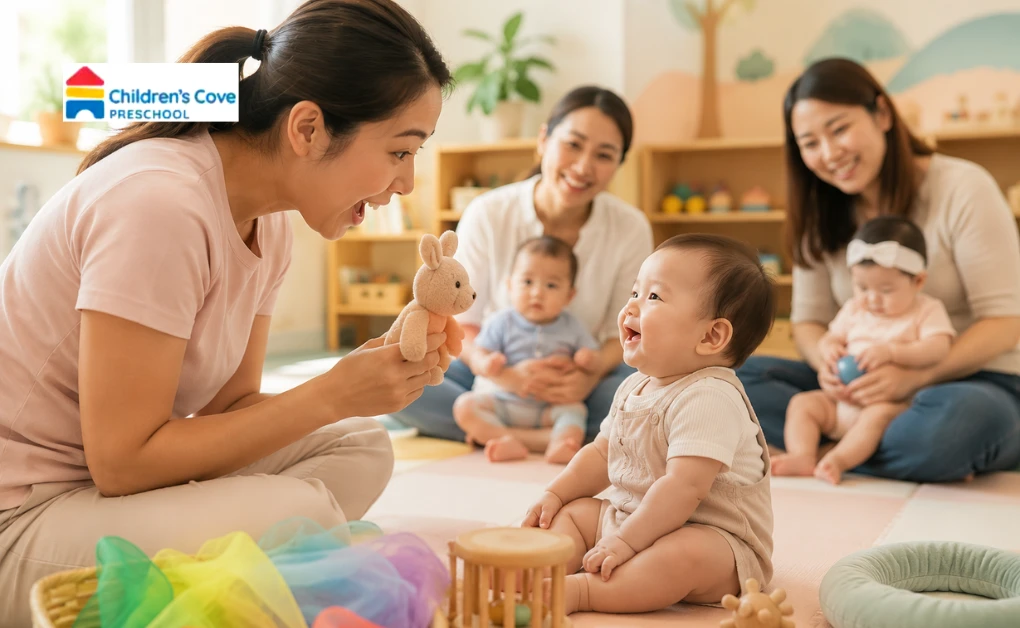
Every session is shaped around the way babies naturally develop at each stage. The songs, the movement, the gentle repetition, none of it is random. Each element is chosen to match what your baby’s brain needs right then. Understanding emotional development in early childhood starts here, in these quiet, repeated moments that carry more weight than they appear to.
Take something as simple as eye contact during a song. To an adult, it is a nice moment. To a baby, it is information. It tells them they are seen and safe, and that the person in front of them can be trusted. Researchers describe this back and forth between caregiver and baby as one of the most important processes in healthy brain and emotional development. Repeat that enough times and it becomes something your baby holds onto.
What Changes When Your Baby Joins a Programme
Many parents notice shifts earlier than they expect. Within the first few weeks some families begin to see changes like:
- Calmer responses to new situations and unfamiliar faces
- Stronger connection and eye contact with you
- More settled patterns as their nervous system adjusts to routine
- Early signs of emotional regulation, less frequent distress, quicker to recover
These are not milestones to tick off a list. They are real emotional development milestones that shape how your child experiences the world well beyond infancy.
Your baby is learning that the world is predictable, that people can be trusted, and that their feelings have a place. That kind of foundation does not fade.
At Children’s Cove, our infant care programme is designed to create this. Not just a place for your baby to spend time, but an environment where every session adds another layer of warmth, trust, and connection.
The Science Behind Why These Early Months Matter
Babies who receive consistent, attentive care in a structured setting are more likely to show stronger emotional regulation, more secure attachment, and calmer stress responses. Research supporting this has been building for decades.
The American Academy of Paediatrics emphasises that nurturing caregiving in the earliest months is one of the strongest predictors of healthy social and emotional outcomes. The WHO Nurturing Care Framework places this kind of early support at the centre of child development globally, highlighting that babies who experience it consistently are better equipped emotionally and socially as they grow.
Structured programmes create additional opportunities for this kind of interaction, particularly for families who want guided support alongside what they are already doing at home.
Looking for emotional development activities you can try at home between sessions? Our guide to sensory play for kids is a great place to start.
How to Pick the Right Infant Care Programme
Not all infant programmes are built the same. Here is what separates the ones worth your time:
Signs a programme is worth your time:
- Sessions led by trained facilitators who understand infant development
- A clear focus on caregiver and baby interaction together, not just baby activities
- Repetition and routine built into every session
- Small group sizes so your baby is not overstimulated
Three questions to ask before you enrol:
- How does this programme support the bond between me and my baby?
- What does a typical session look like and why is it structured that way?
- How will I know if my baby is responding well?
If a programme struggles to answer those, keep looking. And whichever programme you choose, your presence and consistency matter more than any curriculum.
A good programme builds on that. Still working out when to register for infant care? Timing your enrolment early gives you more options to choose from.
Conclusion
Think back to that moment at the very start. Your baby locking eyes with you and smiling. It felt small. But your baby’s brain was already working, already learning what the world around them feels like.
Everything you’ve read here traces back to that same idea. The eye contact, the songs, the repetition, the closeness. None of it needs to be perfect. It just needs to keep happening.
Infant programmes bring structure to that process, particularly in those first months when development is moving faster than most parents realise. And the work you have been doing at home, every response, every cuddle, has been part of this all along.
Children’s Cove believes every baby deserves that kind of start. As a trusted preschool in Singapore with a dedicated infant care programme, every session is designed around emotional development from the very first months. Get in touch today and see what that looks like for your little one.
FAQs
1. How do I know if my baby’s emotional development is on track?
Watch for moments of connection. Is your baby making eye contact? Responding to your voice? Calming when you hold them? These small interactions are the clearest signs things are moving in a healthy direction. Tracking emotional development milestones with your paediatrician is also a simple way to stay on top of how your baby is growing. If your baby seems consistently unresponsive or hard to settle, mention it at your next visit.
2. Is stranger anxiety normal?
Very much so. Around seven to eight months, most babies become wary of unfamiliar faces. It actually signals healthy development, meaning your baby has formed strong enough bonds with their caregivers to notice when someone new walks in.
3. Does screen time affect my baby’s emotional development?
It can. Screens do not respond to your baby the way people do. Emotional development in early childhood is built through live, responsive interaction. A screen cannot return a smile, pause when your baby looks away, or adjust to what your baby needs in that moment. Keeping screen time minimal in the first two years protects the kind of real interaction babies need most.
4. How does my own stress affect my baby emotionally?
Quite a lot. Babies are highly attuned to the people around them. When a caregiver is consistently anxious or overwhelmed, babies pick that up through tone of voice, body language, and the quality of everyday moments together. Looking after your own emotional wellbeing is one of the most direct things you can do for your baby.
5. Does early emotional development affect friendships and behaviour later on?
A great deal. Babies who build secure emotional foundations in their first year are better equipped to manage feelings, trust others, and handle new social situations as they grow. Research on emotional development in children consistently shows that the habits formed in infancy shape how a child connects with the world for years to come. What starts as a calm, connected baby often becomes a child who finds it easier to make friends and handle challenges.