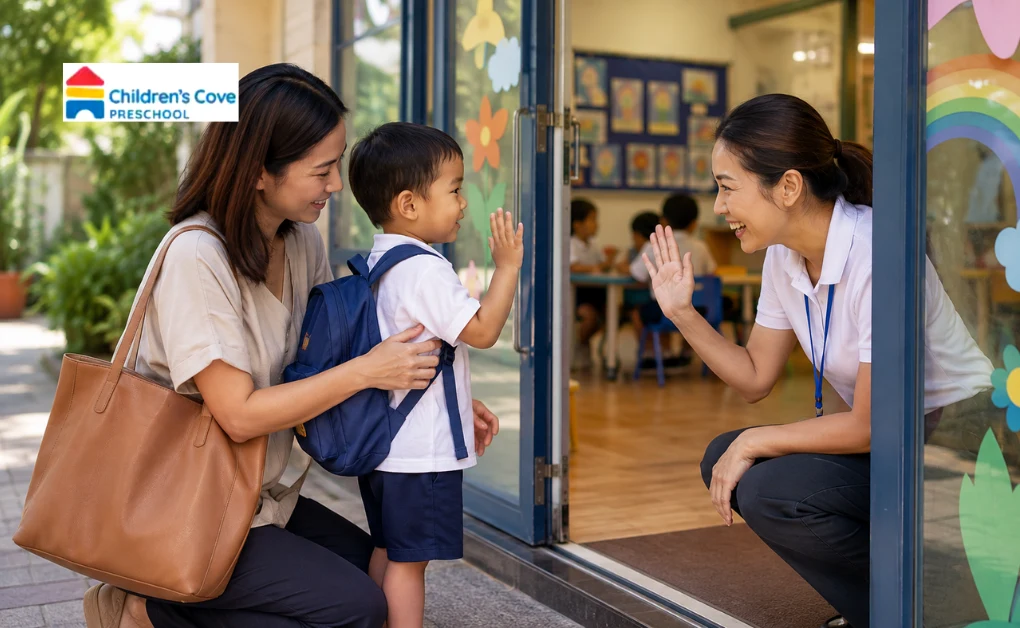
Your child’s first school is where they meet their very first friend, learn to share a crayon, and figure out that the world outside home is actually pretty great.
Picking the right place for all of that to happen is one of the most important decisions you will make as a parent.
If you keep seeing the term “ECDA” while searching for preschools in Singapore and are not quite sure what it means, that is completely normal. Most parents start this process feeling a mix of excitement and quiet panic, especially when there are dozens of schools to compare and a little one demanding your attention at the same time.
But the enrolment process is more straightforward than it looks. Once you know what to expect, you can move through it with confidence instead of second-guessing every step.
This guide covers everything from age requirements and school fees to government subsidies and what to look for when you visit a school, so by the end, you will know exactly where to start.
What Is ECDA and Why Does It Matter for Your Child?
Not every preschool is the same. Some are licensed, monitored, and held to clear standards. Others are not, and that gap is bigger than it looks from the outside.
ECDA stands for the Early Childhood Development Agency. It is the government body that licenses and oversees preschools and childcare centres across Singapore. A school that is an ECDA-licensed preschool has been checked for teacher qualifications, curriculum quality, and classroom conditions before it ever opens its doors to children.
This matters because it takes a lot of pressure off you as a parent. The vetting has already happened. What you are left with is the much more enjoyable job of finding the school that simply feels right for your family.
On top of that, ECDA requires preschools to align with Singapore’s early childhood curriculum framework, including the Nurturing Early Learners (NEL) Framework, while still allowing each centre to implement its own teaching approach. This means the time your child spends at preschool is not just supervised play. It is structured, age-appropriate learning backed by research and designed to support every stage of your child’s development. Preschools like Children’s Cove are built around exactly this standard, with a preschool curriculum that combines ECDA compliance with their own approach to making early learning genuinely enjoyable for young children.
That is a solid foundation to build on.
When Should You Apply for an ECDA Preschool?
This is usually the first question parents ask, and the answer depends on one thing: your child’s age right now.
ECDA preschools cater to children from as young as 2 months old up to 6 years. Each programme is structured around a specific age group, so your child steps into the level that matches their current stage.
| Programme | Age Range |
| Infant Care | 2 to 17 months |
| Playgroup | 18 months to 2 years |
| Nursery 1 and 2 | 3 to 4 years |
| Kindergarten 1 and 2 | 5 to 6 years |
What catches many parents off guard is how quickly spots fill up. Popular preschools can close their waitlists more than a year in advance. So even if your child is still in nappies, it is worth getting on a waitlist sooner rather than later.
Not sure which level is right for your child? Check our guide on Preschool Age in Singapore to see how each stage breaks down.
How to Enrol in an ECDA Preschool in Singapore: Step-by-Step
The process is more straightforward than most parents expect. Here is what it looks like from start to finish.
Step 1: Find the Right Schools
If you are wondering how to find an ECDA-licensed preschool near you, the Preschool Finder tool on the LifeSG portal is the easiest place to begin. You can search by location, age group, and programme type, then shortlist two or three options before moving forward.
Step 2: Visit in Person

A school can look great online and feel completely different when you walk through the door. Attend an open house or book a visit, and pay close attention to how the staff interact with the children already there.
Step 3: Submit Your Application
Each school has its own application process, either online or in person at the centre. Contact them directly to confirm exactly what is needed before you submit anything.
Step 4: Accept Your Offer
When a spot opens up, the school will send an offer letter. Go through the fees and start date carefully, then secure the place by paying the registration deposit within the stated timeframe.
Step 5: Prepare Your Child
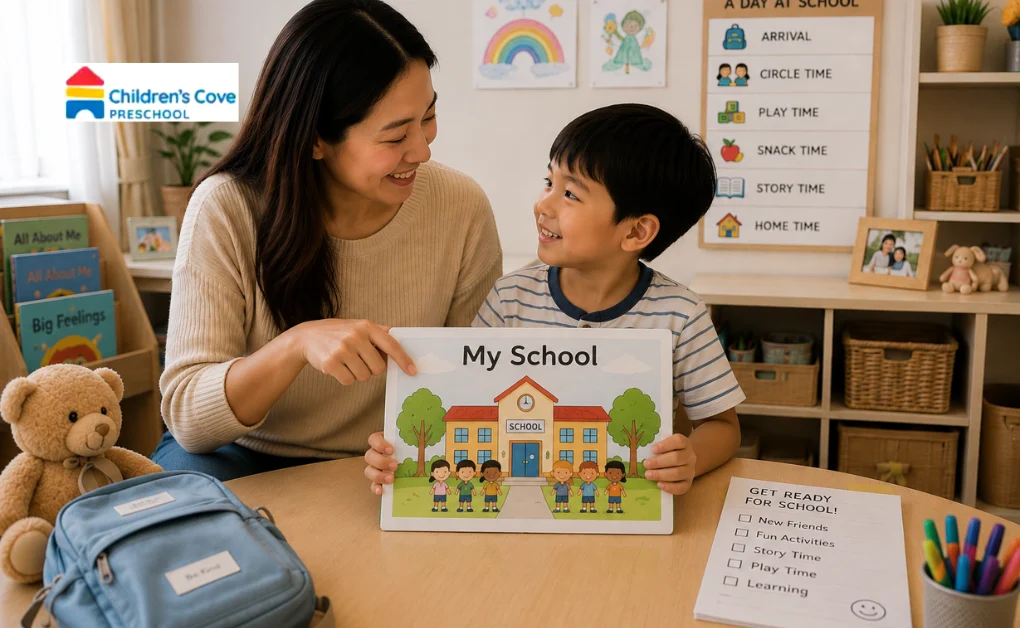
With the admin side sorted, the focus shifts to your child. Talk to them about what school will be like, answer their questions honestly, and give them enough time to warm up to the idea before their first day.
Preschool Fees and Subsidies in Singapore: What to Prepare Before You Apply
Getting your paperwork together before you apply makes the whole process much smoother. Most schools will not move forward with an application until everything is submitted, so it is worth sorting this out early.
What You Will Typically Need
- Child’s birth certificate
- Child’s immunisation records
- Parents’ NRIC or passport
- Proof of residential address
- Recent passport-sized photo of your child
Some schools may ask for additional items depending on the programme, so confirm directly with them before submitting.
Understanding the Fees
Preschool fees vary based on the centre type, programme, and hours of attendance. Full-day childcare generally ranges from around S$700 to S$1,800 per month before any subsidies are applied.
Not sure what to budget for? Check our Cost of Preschool in Singapore guide for a realistic breakdown of what families actually pay.
Subsidies That Bring the Cost Down
The government offers several financial assistance schemes that can significantly reduce your monthly preschool costs.
The Child Care Subsidy applies to children enrolled in licensed infant care and childcare centres. The amount you receive depends on your household income, with lower-income families receiving greater support.
For children attending Anchor Operator, Partner Operator, and MOE kindergartens, the Kindergarten Fee Assistance Scheme (KiFAS) helps reduce monthly fees. Eligible families may pay as little as S$1 per month after subsidies.
Families who require additional financial assistance may also qualify for schemes such as the Child Care Financial Assistance (CCFA) and Start-Up Grant (SUG), which help cover one-time enrolment expenses like registration fees, deposits and uniforms. Parents enrolling children in eligible kindergartens may also apply for the KiFAS Start-Up Grant (KiFAS SUG) if they meet the income criteria.
Wondering if you qualify and how much you could actually save? The Infant Care Subsidy in Singapore 2026 guide covers exactly that.
How to Choose the Right ECDA Preschool in Singapore
Singapore has no shortage of preschool options, which sounds helpful until you are actually sitting there trying to pick one. It helps to first get a feel for how preschool education in Singapore generally works, then use that as a base for knowing what to prioritise as you compare schools.
Look for SPARK Certification
SPARK stands for Singapore Preschool Accreditation Framework. It is an accreditation given to preschools that go beyond the basic ECDA licensing requirements. A SPARK-certified school has been independently assessed for teaching quality, learning environment, and how well it supports ECDA children’s learning goals across each stage of development. Not every ECDA preschool holds this certification, so it is worth checking when you shortlist.
Understand the Curriculum
Different preschools take different approaches to learning. The three most common ones you will come across are:
- Play-based learning centres on exploration and creativity through activities rather than structured lessons
- Montessori lets children learn at their own pace using hands-on materials in a structured but flexible environment
- Bilingual programmes give equal weight to English and a second language, most commonly Mandarin, from an early age
What works best depends entirely on your child’s personality and how they learn.
Questions Worth Asking During Your Visit
- What does a typical day look like for the children?
- How do teachers support a child who is struggling to settle in?
- What is the teacher-to-child ratio?
- How does the school keep parents updated?
The Practical Side Matters Too
Beyond certifications and curriculum, the everyday logistics count for a lot. How far is the school from home or work? Do the hours fit your routine? And when you walk in, does the place feel like somewhere your child would actually be happy?
Those answers matter just as much as anything on paper.
What to Expect After Enrolment in ECDA Preschool?
Once your child’s enrolment is confirmed, the preschool will guide you through the remaining steps before classes begin. While every school has its own process, most parents can expect the following:
- Approve your subsidy applications via the LifeSG portal once the preschool triggers the digital form.
- Pay the registration fee, deposit, and first month’s school fees.
- Receive information about your child’s class, teachers, daily schedule, and school policies.
- Purchase any required uniforms, school bags, or learning materials.
- Attend an orientation session or school tour to help your child become familiar with the environment.
- Prepare for a short settling-in period, where some children attend shorter sessions while they gradually adjust to their new routine.
It is perfectly normal for young children to take a little time to settle into preschool. Some adapt within a few days, while others need several weeks. Staying positive, maintaining a consistent routine, and working closely with your child’s teachers can make the transition much smoother.
Preschool Enrolment Checklist
Before submitting your application, use this checklist to make sure everything is ready:
✔ Child’s birth certificate
✔ Child’s immunisation records
✔ Parent’s NRIC or passport
✔ Proof of residential address
✔ Recent passport-sized photograph of your child
✔ Preferred preschool shortlisted
✔ School visit or open house attended
✔ Monthly fees and registration charges reviewed
✔ Government subsidy eligibility checked
✔ Waiting list and enrolment timeline confirmed
Having these documents and decisions prepared in advance helps make the enrolment process faster and reduces the chances of delays. If you are shortlisting based on location, Children’s Cove has campuses in Orange Grove, Novena, and Sembawang that you can add to your list while you finalise the rest.
Conclusion
Picking a preschool feels overwhelming at the start. There are options to compare, terms to understand, and decisions that feel heavier than they probably should.
But you have covered all of it now.
From understanding what ECDA registration actually means, to knowing what documents to prepare, what to look for during a school visit, and which subsidies to apply for, you are going into this with a clear picture of what to expect.
That puts you well ahead of where most parents are when they first start looking.
When your child walks through those doors on their first day, backpack on and ready to go, a lot of that moment comes down to the preparation you did before it ever arrived.
If you are looking for a place to start, Children’s Cove is an ECDA-registered, SPARK-certified preschool in Singapore with a genuine focus on making early learning feel like something children actually look forward to.
Book a school tour today and see it for yourself.
FAQs
Can I transfer my child from one preschool to another?
Yes. Start by formally withdrawing from the current centre, giving whatever notice period your enrolment agreement requires. Then register at the new school and bring your child’s previous school records along. One thing to note: if your child receives government subsidies, ECDA will reassess your household income at the point of transfer since it counts as a fresh enrolment.
Do both parents need to complete the subsidy application?
Yes. After your child’s enrolment is confirmed, the preschool triggers the subsidy form through LifeSG. Both parents must fill it in within 14 calendar days. If the form does not arrive within the first week, contact the school and ask them to resend it.
Is there a registration fee on top of the monthly fees?
Most preschools charge a one-time registration fee when you sign up, usually between S$100 and S$300, and it is typically non-refundable. Some centres also require a deposit of one month’s fees upfront. Ask about both before you commit to anything.
What is the difference between an Anchor Operator and a Partner Operator preschool?
Anchor Operators receive more government funding, which lets them keep monthly fees lower and prioritise affordability. Partner Operators get some government support too but tend to charge more. The distinction matters because the type of operator your chosen school falls under affects how much subsidy you are eligible to receive.
Does my child need to be toilet trained before starting preschool?
For infant care and playgroup, no. Staff at these levels are trained to handle it. For nursery and above, most schools prefer basic toilet independence but are generally understanding if a child is still working on it. When in doubt, ask the admissions team during your visit so there are no surprises on day one.