Choosing a toy for your toddler can be harder than it looks. With so many colourful options on the shelves, it’s easy to wonder which ones are actually worth buying. The best toys for toddlers do more than keep children occupied; they give little hands something to build, sort, create and figure out while supporting skills they use every day. Good educational toys for toddlers work quietly in the background of play, so your child learns without ever feeling taught.
Building blocks can encourage coordination, puzzles can develop problem-solving, and pretend-play toys can help children express ideas and emotions. Whether you’re shopping for a birthday gift or adding to your child’s playroom, knowing what to look for can help you choose toys that offer both enjoyment and real developmental value.
10 Best Educational Toys for Toddlers
Toddlers learn by getting involved. They stack, match, squeeze, scribble, pretend and test what happens next. That’s why the best learning toys for toddlers aren’t always the ones with the most buttons or features. Look for toys that let your child take the lead while practising skills through everyday play.
1. Building Blocks and Construction Toys
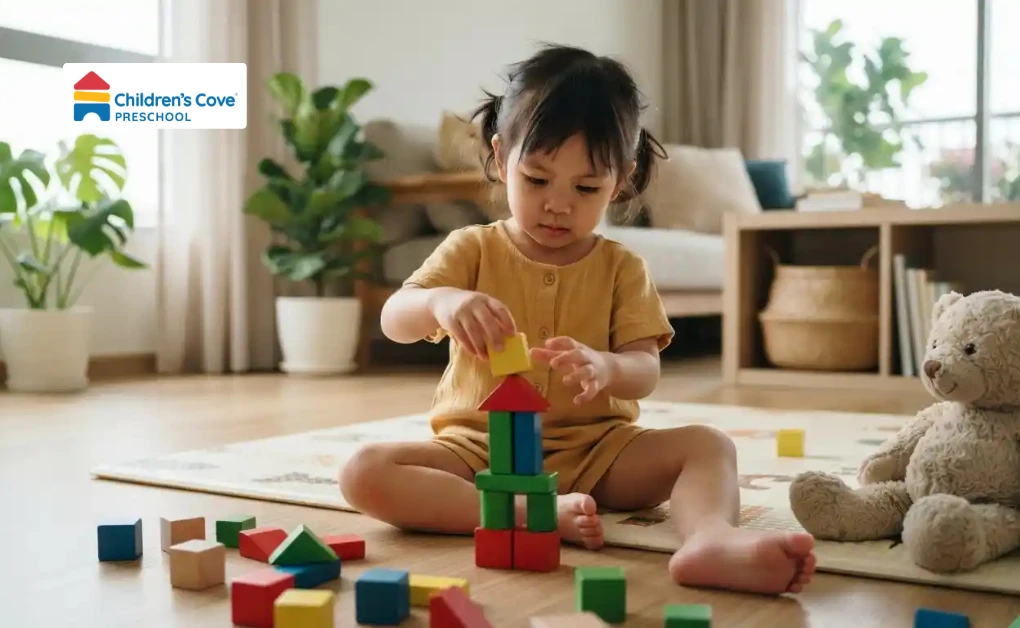
Building blocks turn a pile of pieces into towers, houses, bridges and whatever else your toddler can imagine.
- For younger toddlers, go for larger, chunkier pieces. Sets like LEGO DUPLO or Mega Bloks First Builders are easier for little hands to grip and pull apart.
- Once your child is around 3, magnetic tiles such as MAGNA-TILES are worth trying. The pieces are smaller and lighter, and kids start noticing how shapes fit together to form something bigger.
- Real learning hides in the play here: balance, symmetry, cause and effect. Blocks are one of the simplest STEM toys you can buy for toddlers, and you don’t need to point any of that out. A simple “can you build a tower for your teddy?” is usually all it takes to get them going.
2. Shape Sorters and Stacking Toys
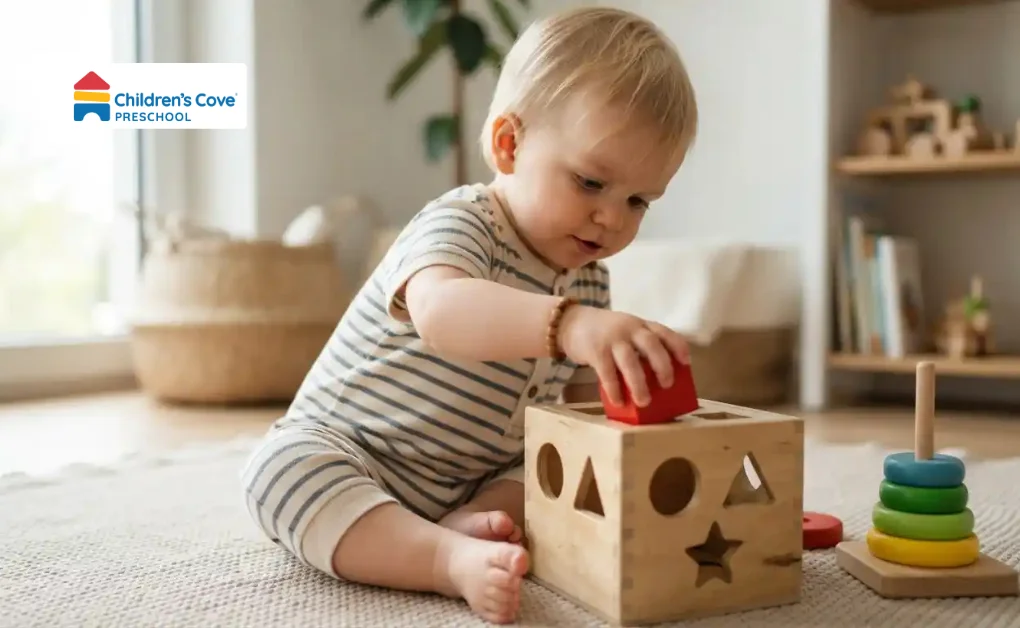
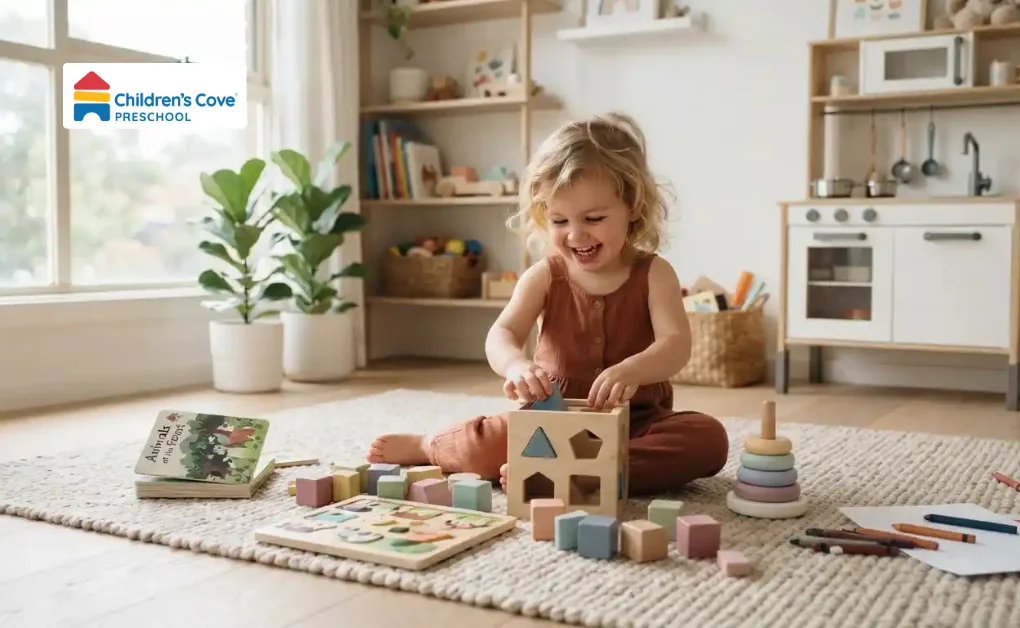
There’s something satisfying about watching a toddler work out a shape sorter: the trial, the frustration, the moment it finally clicks into place.
- A classic shape-sorter cube is a good starting point and holds up well through multiple kids or hand-me-downs.
- Ring stackers, like the Fisher-Price Rock-a-Stack, are great for practising size order. Go from big to small, then knock it all down and start over (which, let’s be honest, is half the fun).
- They’re really building patience and problem-solving, one wrong-shaped block at a time.
3. Puzzles
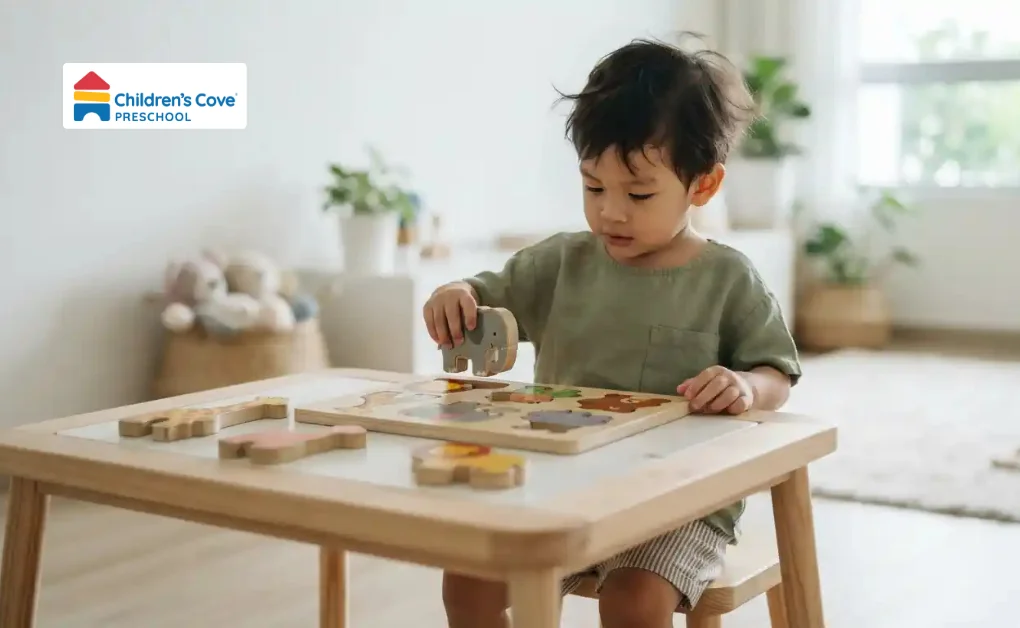
Puzzles are toys that grow with your child. Start simple and work up as their patience and hand control improve.
- Chunky wooden knob puzzles with four to six pieces are a good first step, since the knobs make it easier for small fingers to lift and place each piece.
- As they get more confident, simple jigsaw puzzles with familiar pictures (animals, vehicles, family photos) keep things interesting.
- If your toddler gets stuck, resist the urge to just fix it for them. A small hint, like “try turning it around,” goes further than solving it yourself, and the win means a lot more when they get there on their own.
4. Pretend-Play Toys
Give a toddler a toy kitchen, and suddenly you’re being served invisible soup. Hand them a doctor’s kit and teddy has a stomachache.
- Kitchens, tea sets, dolls, and doctor’s kits are solid starting points. They don’t need to be elaborate to spark a good hour of make-believe.
- This is where language and emotional development quietly happen, as kids narrate what they’re doing and work through feelings with their toys.
- Join in if you’re invited, but try to follow their lead rather than steering the story yourself.
5. Sensory and Activity Toys
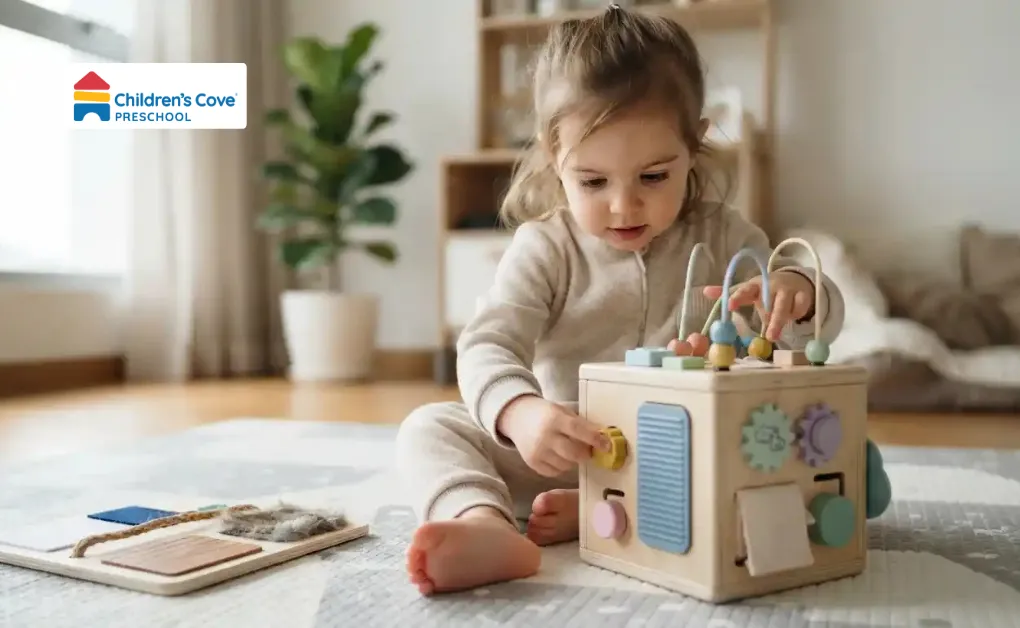
Toddlers are basically tiny scientists, and sensory toys let them experiment.
- Activity cubes, like the VTech Twist & Play Cube, pack a few different textures and mechanisms into one toy, which helps hold attention longer than a single-function toy.
- Textured boards and simple push-and-turn gadgets work just as well and often cost less.
- If interest fades, rotate which sensory toy is out each week rather than buying something new. It often works just as well. For more ideas beyond toys, read our guide to sensory play for kids in Singapore for activities you can set up at home with everyday household items.
6. Art and Creative Toys
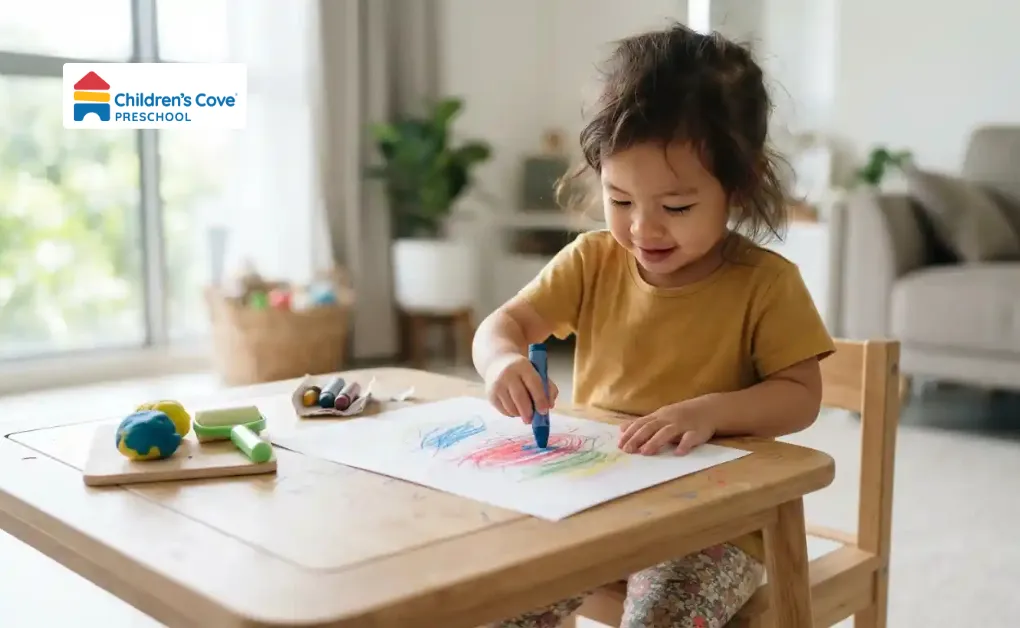
You don’t need much here. A few jumbo crayons, washable paint, or a tub of Play-Doh can keep a toddler busy surprisingly long.
- Jumbo crayons and chunky washable markers are easier on developing grips than standard ones.
- Play-Doh starter sets add a tactile, squishy element that many kids gravitate toward.
- Try not to correct what they make or steer them toward “the right way” to colour. The scribbling itself is doing the work, building the fine motor control they’ll later use for writing.
7. Musical Toys and Simple Instruments
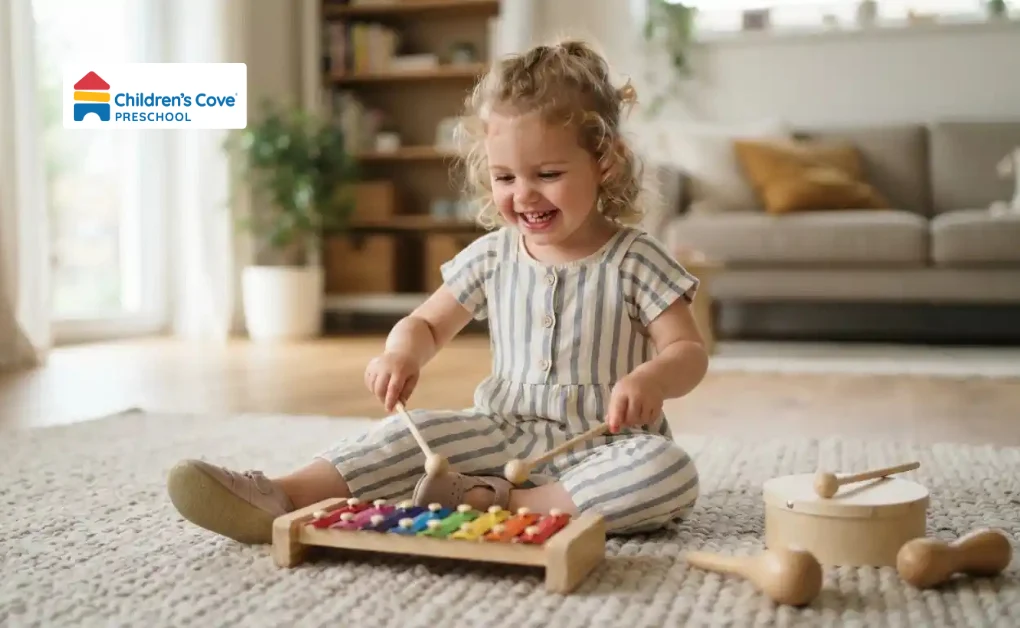
Bang a drum, shake a shaker, tap a xylophone. For a toddler, that’s basically magic. Sound just happens.
- A toddler-sized drum, a small xylophone, or a shaker egg makes a great starting instrument, and none of them needs much explanation.
- Stick with sturdy, toddler-made instruments. Some toy versions get uncomfortably loud, so test them before you buy.
- Put on a song and let them bang along. That’s really the whole activity, and it introduces rhythm and timing without anyone having to teach it directly.
8. Early Learning Toys for Colours, Numbers and Letters
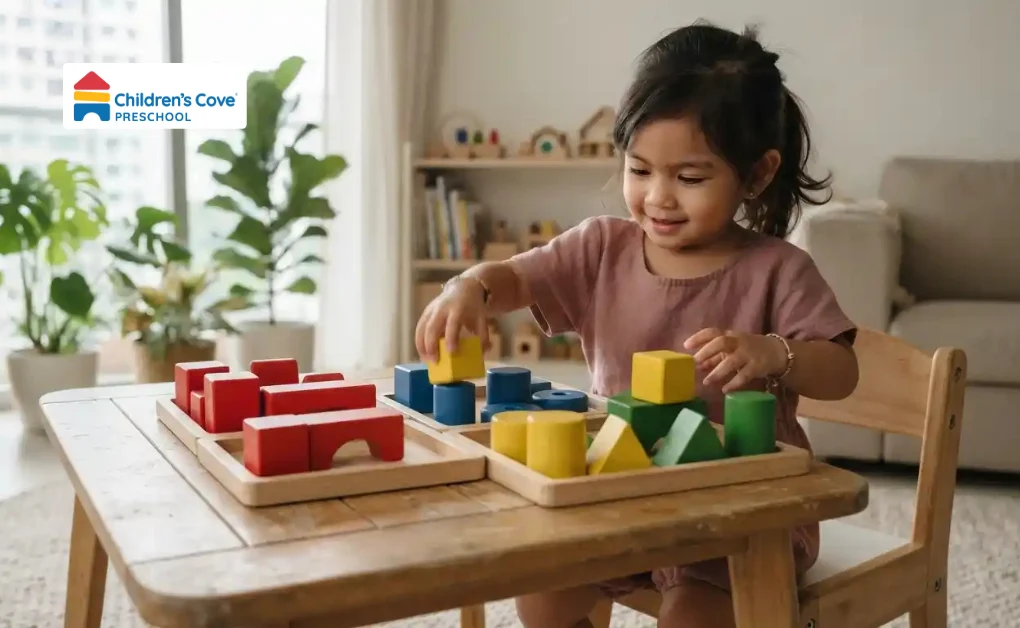
You don’t have to sit a toddler down to teach them colours or numbers. Most of it sinks in through toys they’re already playing with.
- Brands like LeapFrog and VTech make toddler ranges built around letters, numbers, and colours, and you can find them at retailers like Toys”R”Us in Singapore.
- Simple matching games and counting toys work just as well if you’d rather skip the batteries.
- Narrate as you go: count the blocks out loud, name a colour, point out a letter they recognise. Keep it light; it should feel like play, not a lesson. For a few more ways to build this in without buying anything new, read our guide to numeracy activities you can do at home.
9. Books and Storytelling Toys
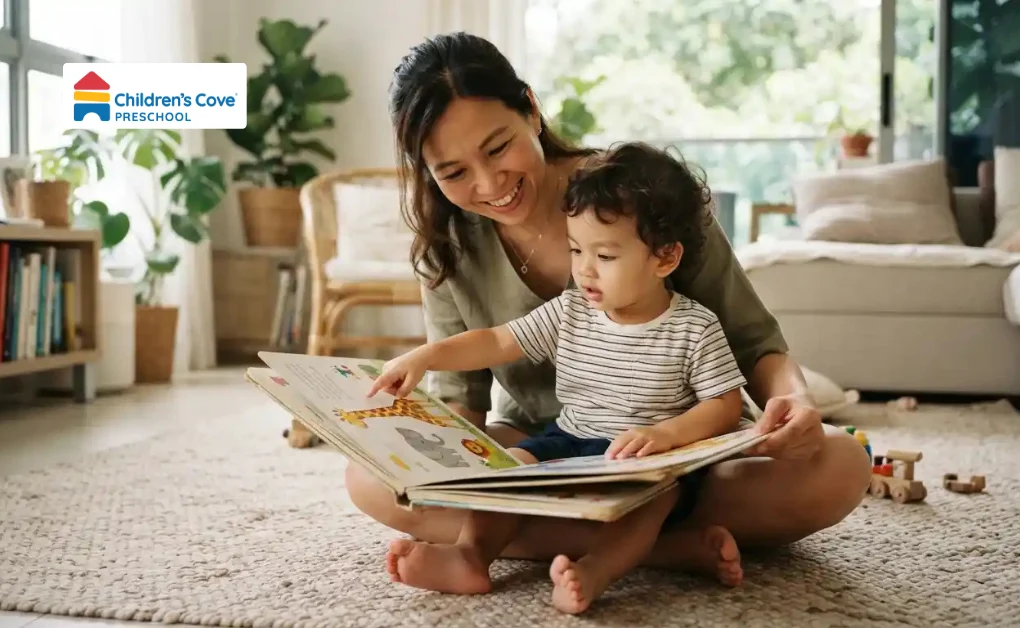
A good picture book can do a lot in a few pages: new words, a new world, a reason to sit still for five minutes.
- Interactive books like Don’t Push the Button! or Press Here work particularly well for this age, since they invite the child to physically take part rather than just listen.
- Regular picture books with strong illustrations are just as valuable. The pictures give you plenty to talk about, even before your toddler follows the story.
- Ask questions as you read together, like “where’s the cat hiding?” or “what do you think happens next?” It turns story time into a two-way conversation instead of a monologue.
10. Active Play Toys
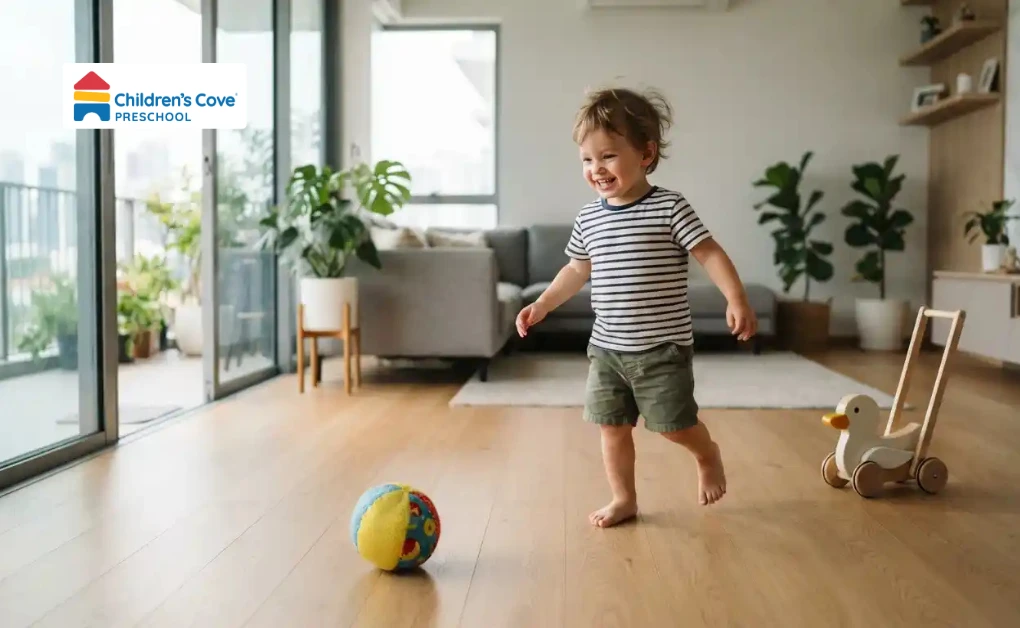
Toddlers have a lot of energy to burn, and active play toys give that energy somewhere useful to go.
- A soft ball, a push-and-pull wagon, or a ride-on toy sized to your child are all solid options depending on age and space.
- If you’re working with a smaller home, look for compact, indoor-friendly versions. This is especially useful in Singapore, when the heat or rain rules out the playground.
- The goal isn’t a specific toy so much as regular movement. Over time, this kind of play builds balance, coordination, and confidence in their own body.
Which Educational Toys Help Toddlers Build Different Skills?
Different toys give toddlers different ways to learn. If you’re choosing something with a particular skill in mind, here are some easy options to consider:
- Fine motor skills: Building blocks, stacking toys, puzzles, and Play-Doh involve small hand movements such as picking up, squeezing, and fitting pieces together.
- Problem-solving: Shape sorters, puzzles, matching games, and construction sets give children small challenges to solve on their own.
- Language development: Picture books, pretend-play sets, and storytelling toys create natural chances to hear new words and talk about ideas.
- Creativity: Art materials, building sets, dolls, and pretend-play toys give children room to make their own choices and stories.
- Early STEM skills: Building blocks, magnetic tiles and sorting toys introduce ideas such as shapes, patterns, size, balance and cause and effect.
- Gross motor skills: Balls, push-and-pull toys and suitable ride-on toys encourage toddlers to move, balance and coordinate their bodies.
- Social and emotional skills: Pretend-play sets, dolls and simple games give children opportunities to practise sharing, taking turns and expressing feelings.
A small, varied collection gives your toddler plenty of opportunities to build, create, communicate, move, and solve problems as they grow.
Best Educational Toys by Age Group
Not every toy works equally well at every age. Here’s a quick reference for which toys tend to work best at each stage:
1–2 Year Olds
Ring stackers, chunky building blocks (LEGO DUPLO, Mega Bloks), and larger shape sorters. Grip and coordination are still developing at this stage, so bigger, simpler pieces work best.
2–3 Year Olds
Magnetic tiles (MAGNA-TILES), knob puzzles, pretend-play sets, and storytelling toys, as fine motor control and imagination grow, these options become more engaging.
How to Choose Educational Toys for Toddlers in Singapore
A toy can look fun and still not be the right choice for your child. Before buying toys for 1 to 3-year-olds, consider their age, safety, how they’ll use it, and whether it fits into your everyday routine.
- Check the recommended age. Age labels help you choose toys that match your toddler’s stage, especially when a toy has small pieces, magnets, or features designed for older children. Singapore’s Consumer Product Safety Office (now overseen by the Competition and Consumer Commission of Singapore) advises checking age labels and choosing toys suited to a child’s age and ability.
- Look for safe, sturdy materials. Choose toys with smooth edges and parts that can handle regular use. Check them regularly and replace anything that’s cracked, broken, or coming loose.
- Be careful with small parts and magnets. Small parts can be a choking hazard for young children, while loose magnets can be dangerous if swallowed. Keep detachable pieces and magnetic toys away from toddlers unless they’re specifically designed for their age group.
- Check batteries and cords. For battery-operated toys, make sure the battery compartment is firmly secured. Keep button batteries well out of reach, as swallowing one can cause serious injury. Keep long cords and strings away from young children.
- Choose toys with multiple uses. A good toy doesn’t have to do everything for your child. Blocks can become towers, houses or roads, while a pretend-play set can become something different each time. Toys that leave room for new ideas stay useful as your child grows.
- Think about your home and daily routine. Consider how much space you have, where you’ll store the toy, and how often your child will likely use it. A toy that fits naturally into your daily routine is more likely to become a favourite.
A small selection of safe, age-appropriate and engaging options can give your toddler plenty to do while fitting comfortably into everyday family life.
How Parents Can Turn Everyday Play Into Learning
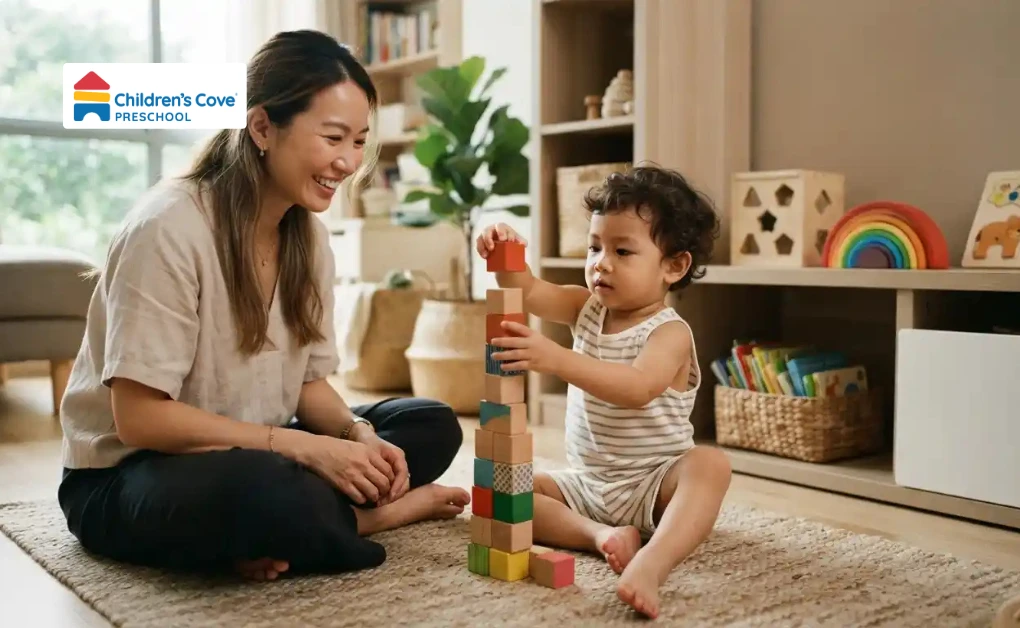
Small things you do while playing together can make the experience richer without taking away the fun.
- Ask simple questions. Give your toddler something to think about instead of showing them what to do. Ask “Which one is bigger?” or “Where should this piece go?” Then give them time to answer or have a go.
- Follow their ideas. If a block becomes a phone or a spoon becomes a microphone, play along. Letting your child take the story in their own direction gives them space to use their imagination.
- Give them time. Toddlers don’t always get things right on the first try. Try not to step in too quickly when something is difficult. A little patience gives your child the chance to discover an answer on their own.
- Keep favourite games going. If your toddler wants to build the same tower or read the same book for the tenth time, that’s okay. Familiar activities let them notice new details while enjoying something they already know.
The goal is simple: be present, join in when they want you to, and let them enjoy the process. Not every moment needs to be educational for learning to happen, and that same idea naturally carries into a good preschool environment, where hands-on exploration and play-based learning build on the habits you create at home.
Conclusion
Choosing educational toys doesn’t mean buying every new learning toy you see. A few well-chosen options can give your child plenty of ways to build, imagine, create, move and explore at their own pace.
Whether it’s LEGO DUPLO, MAGNA-TILES, a simple puzzle, a picture book or a pretend-play set, what matters is the experience the toy creates. Give your toddler time to experiment, make mistakes and come up with their own ideas.
For families in Singapore, the goal is simple: choose toys that fit your child, your home and your everyday life, then let play do the rest.
Looking for the best preschool in Singapore where your child can keep learning through play? At Children’s Cove, children learn through a child-centred, play-based approach. Our Building Blocks™ curriculum and Exploration Zones™ give children hands-on opportunities to learn through exploration and purposeful play across language, numeracy, motor skills, creative expression, and social-emotional development.
Book a school tour with Children’s Cove
FAQs
How many toys should a toddler have?
Toddlers don’t need a room full of toys. A small selection with different types of play, something to build, something to sort, something for pretend play, can be enough. If your child seems overwhelmed or ignores most of what’s on the shelf, that’s often a sign there’s simply too much out at once. Rotating some toys every so often, keeping half in storage and swapping them in later, can also make old favourites feel new again.
Are wooden toys better than plastic toys for toddlers?
Not necessarily. Both can be good choices when they’re safe, sturdy, and age-appropriate. Wooden toys tend to hold up well over time, while plastic ones are usually lighter and easier to clean, which can matter for messier play or bath time. Instead of focusing only on the material, look at what the toy lets your toddler do.
Are electronic educational toys good for toddlers?
They can have a place in play, but they shouldn’t be the only option. Hands-on toys that let toddlers build, move, create, and interact give them more control over what they do. If you do include electronic toys, look for ones that respond to what your child does rather than ones that do most of the “playing” on their own.
Are Montessori toys good for toddlers?
Montessori-inspired toys can help practise independence, concentration, and everyday skills. However, a toy doesn’t need a Montessori label to support these areas. Simple sorting, stacking, building, and practical-play activities can do the same, especially when your child has space to work through them at their own pace.
Why does my toddler lose interest in toys so quickly?
This is common. Toddlers’ interests change as they grow, so try putting a toy away for a while and bringing it back later; it will often feel new again. You can also change how you use it; for example, turn building blocks into a pretend shop, or use them to practise colours and counting. A toy losing its shine isn’t a sign it was the wrong choice; it’s usually just a sign your toddler is ready for the next challenge.