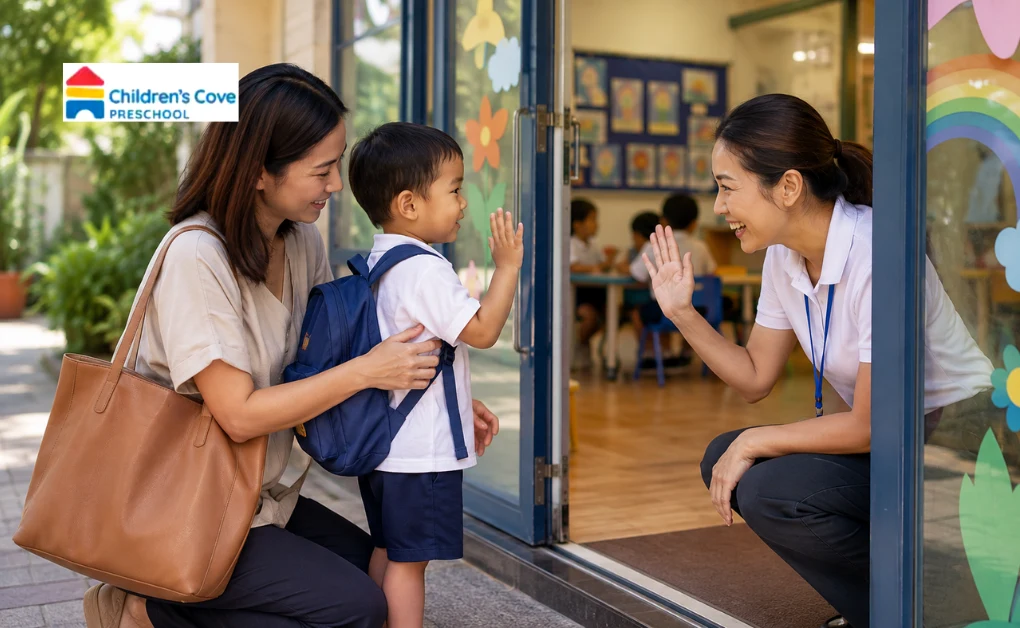
Most parents remember the exact look on their child’s face at that first classroom door, whether it was a grin, a frozen stare, or tears they weren’t expecting. None of these reactions means anything is wrong. Excitement, nervousness, clinginess, even a few tears at drop-off, all of this sits well within the normal range for a young child facing a new environment.
Getting a child ready for that day is less about a single conversation and more about making the space, the routine and the moment of separation feel familiar before term even begins. From visiting the preschool beforehand to building a workable morning routine, packing the right things, and handling the goodbye itself, a little preparation in the weeks before makes the transition much smoother for the child and the parent.
Preparing Your Child in the Weeks Before Preschool
Preparation works best when it is spread across the weeks before term starts, not squeezed into the final few days.
Visit the Preschool Beforehand
A visit before the first official day turns an unfamiliar space into one the child already recognises. This should include seeing the actual classroom, meeting the teacher, and walking through the play area together. Showing the child exactly where drop-off and pick-up will happen is a small detail that removes one more unknown from an already unfamiliar experience.
Most preschools in Singapore offer orientation sessions or open house visits ahead of the term; if one hasn’t been scheduled yet, it is worth asking the centre directly. According to ECDA’s Beanstalk “Ready, Set, Preschool” guidance, early familiarisation visits are among the most effective ways to ease a child into a new setting.
Parents who would like to walk through a classroom before term starts can arrange a visit at one of the Children’s Cove schools near them.
Talk About Preschool Honestly and Positively
Framing preschool positively helps, but it works best when it stays realistic. Talk about the activities the child will get to try, the friends they might make, and the teacher who will be there to help them settle. Keeping the conversation concrete makes a real difference; saying “you’ll get to paint and sing songs” lands far better than a vague line like “you’ll learn so many things.”
Avoid promises that cannot be guaranteed, such as telling a child they won’t cry or won’t miss their parents; if those promises don’t hold up on the day, they can undermine the child’s trust. Let the child ask questions in their own time, and answer simply and honestly instead of brushing worries aside.
Practise Short Separations at Home
Children need repeated proof that a goodbye is always followed by a return. Short separations at home, with a trusted relative, helper or family friend, give them exactly that. Start with just a few minutes and gradually extend the duration over the following weeks.
One habit matters more than any other here: always say goodbye properly. Slipping away quietly might seem easier in the moment, but it chips away at the trust that gets tested again on the actual first day.
Rehearse the Routine Through Pretend Play
Pretend play gives a young child a low-pressure way to rehearse what a school day will actually involve. Act out packing a school bag, saying goodbye at the door, greeting a teacher, sitting for story time, having a snack, washing hands, asking for help, and getting ready to go home.
This is about walking through the sequence of events, not the exact timing of the morning, which is covered separately below. Taking turns playing “teacher” and “child” keeps the exercise playful and most children respond well to it.
Building a Predictable Daily Routine
A calm first day is rarely luck. It is a schedule the child has already practised, morning after morning, before term even starts.
Adjust Bedtime and Wake-Up Time
A sudden shift in schedule on day one tends to backfire, since a tired child copes worse with a big transition. Start adjusting bedtime and wake-up time gradually, ideally one to two weeks ahead, and align wake-up time with what the school morning will demand. Consistency matters as much as the hour itself; a predictable bedtime settles a child faster than simply moving it earlier.
Rehearse the Actual Morning Routine
Walk through the full sequence in advance: wake up, toilet, wash, get dressed, have breakfast, put on shoes, pack the bag, then leave the house. The aim is for this to already feel familiar by the time the real first morning arrives. Practising it at an unhurried pace, two or three mornings before term starts, helps prevent the panic that a rushed morning can bring.
Practise Self-Help Skills
Encourage skills such as eating independently, drinking from their own water bottle, washing hands, putting on or taking off shoes, and carrying their own bag. Small fine motor skills activities can also help children practise everyday tasks such as tidying toys, handling belongings, and managing simple tasks independently. These are worth practising, not mastering; a child need not be perfect at any of this beforehand.
What to Pack for Your Child’s First Day of Preschool
A packed bag says more than it seems to. Knowing what actually needs to go in it, and having it ready ahead of time, is what keeps the first morning from turning into a scramble.
Essentials to Check Against the School’s Own List
Every preschool has its own requirements, so it is worth checking the centre’s list first. Commonly needed items include a school bag, water bottle, a change of clothes, nappies or pull-ups if still needed, a comfort item if the school permits one, tissues or wipes if requested, and any supplies the school has specifically asked for. Treat this as a general guide, since requirements vary between centres.
Label Everything
Labelled belongings are much easier for both the child and the teacher to track, especially in a classroom where several children may have identical items. Label the bag, water bottle, clothes, shoes, comfort item, and lunch box if one is being used.
Prepare It All the Night Before
Lay out clothes, pack the bag, fill the water bottle, gather any required documents, and plan breakfast the evening before. A calm, unrushed morning almost always starts with a prepared night, and it removes the pressure of last-minute searching.
Handling Separation Anxiety and the Goodbye
The goodbye is usually the hardest part of the morning. A little structure here makes it easier for both of them.
Is It Normal for a Child to Cry on the First Day?
Crying at drop-off is a common response to a new environment and does not signal that anything is wrong. Some children settle within minutes, others take much longer, and both are normal. Tears on the first day are not, by themselves, an indication that the preschool is a poor fit.
The Goodbye Ritual: Short, Warm, Consistent
A simple structure works best: acknowledge the child’s feelings, offer brief reassurance, tell them in child-friendly terms when you’ll be back, say goodbye, then leave. Never sneak away without saying goodbye, as it can undo the trust built through earlier practice. At the same time, avoid lingering, since a drawn-out goodbye tends to prolong distress instead of easing it.
A consistent phrase or small ritual, such as a specific hug or a set sentence repeated each morning identically, gives the child something predictable to hold onto.
If Your Child Refuses to Enter the Classroom
Stay composed, acknowledge the child’s feelings without over-explaining, and let the teacher step in to support the handover. Negotiating indefinitely at the classroom door tends to extend the distress instead of resolving it. Staff are trained for exactly this moment, so following the centre’s existing transition procedure is usually the smoothest path forward.
Trusting the Teacher During Handover
Once the goodbye has been said, the most helpful thing a parent can do is trust the teacher to take over. Briefing the teacher on the child’s habits, comfort needs and communication style beforehand makes the handover smoother, and a strong relationship formed early makes this moment easier well beyond the first day.
What to Expect as Your Child Settles Into Preschool
Common Reactions in the First Week
Tiredness after school, quietness, changes in appetite, wanting more comfort at home, and occasional clinginess are all typical adjustment responses. Some children settle within days, others take a few weeks, and the pace varies from child to child.
Asking the Right Questions After School
Generic questions such as “Did you have fun?” tend to get a flat yes or no. Try asking what they played with, who they sat with, what felt new today, or what made them smile. Specific questions like these open up a proper picture of the day instead of a one-word answer.
Praising Effort Over Outcome
Praise going into class, trying something new, talking to a teacher, playing with others, or managing a small task independently. Recognising effort and participation builds confidence for the next day, and keeps the early weeks focused on settling in rather than academic achievement.
When Should Parents Be Concerned?
Nervousness in the first few days, or even the first couple of weeks, is normal and usually settles on its own. If distress continues well beyond that window or interferes with the child’s daily functioning, it is worth speaking with the preschool’s educators first. For ongoing or significant emotional or behavioural symptoms, the next step is to consult a healthcare professional.
First Day of Preschool Checklist
Before Preschool Starts
- Visit the preschool
- Talk about what it will be like
- Practise short separations
- Establish sleep and morning routines
- Practise self-help skills
- Check the school’s required items list
The Night Before
- Prepare clothes
- Pack the bag
- Fill the water bottle
- Prepare any required items
- Set a suitable bedtime
On the First Morning
- Allow enough time
- Keep the morning calm
- Follow the rehearsed routine
- Keep the goodbye short and confident
- Let the teacher take over the transition
Conclusion
The goal was never a child who feels no nerves or sheds no tears on the first day. It is a child who finds the environment familiar, feels confident that a parent will return, and knows there are adults nearby ready to help. That confidence rarely comes from a single pep talk on the morning itself. It comes from everything done in the weeks before: a preschool that no longer feels like a strange place, a routine the child has already lived through, a bag packed with the right things, and a goodbye that stays short and steady even when it is hard.
None of this guarantees a dry-eyed first morning, and it does not need to. What it does is give the child something to hold onto when the moment actually arrives. At Children’s Cove, this same thinking shapes the early days of preschool, with a classroom environment and settling-in process designed around exactly this kind of familiarity.
FAQ
How can I tell if my child is ready for preschool?
Readiness is less about a fixed age and more about a few signs: managing brief separations without lasting distress, some basic communication, and curiosity about other children. Most toddlers show a mix of readiness and hesitation, and that combination is still considered normal.
What should I do if my child has never been away from me before?
Start smaller than usual. A few short separations of just five to ten minutes, with someone the child already trusts, give a helpful starting point before building up to the longer stretches a school day requires. There is no need to rush this in the final days before term.
What should I tell my child’s preschool teacher before the first day?
Share anything that helps the teacher settle the child faster, sleep habits, food preferences or allergies, comfort words or gestures the child responds to, and how the child usually reacts to new situations. A short note or a quick chat during drop-off is often enough.
What if the teacher says my child cried after I left but settled later?
This is common and usually means the child needed a few minutes to adjust once the parent was out of sight. Most children calm down well within the same session, and teachers will flag it if the crying continues well beyond that.
Can I stay in the classroom on the first day if my child is struggling?
This depends entirely on the preschool’s own policy, since some centres allow a brief settling-in period while others prefer a clean handover from the start. Following the teacher’s guidance in the moment usually works better than deciding on your own.